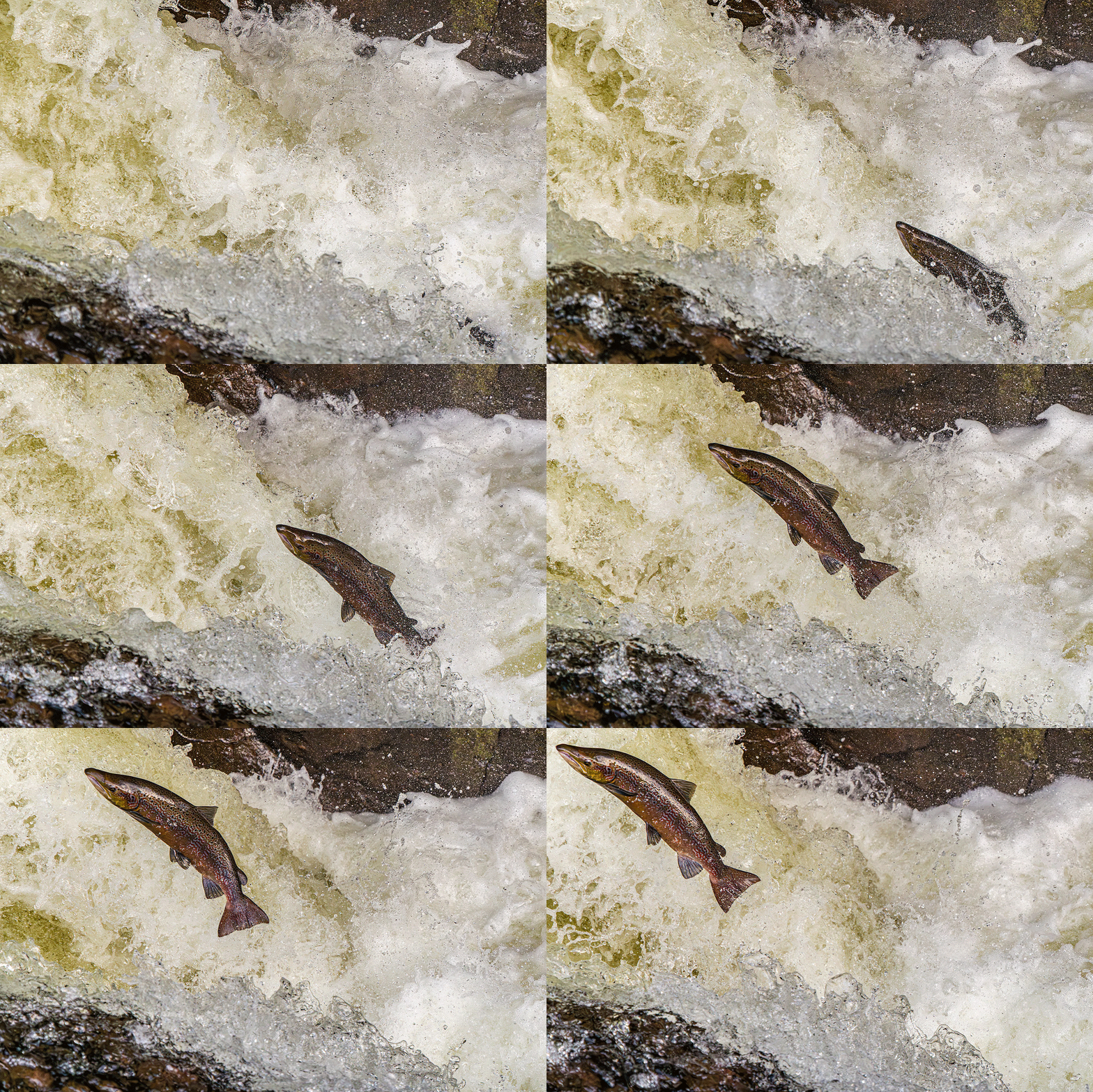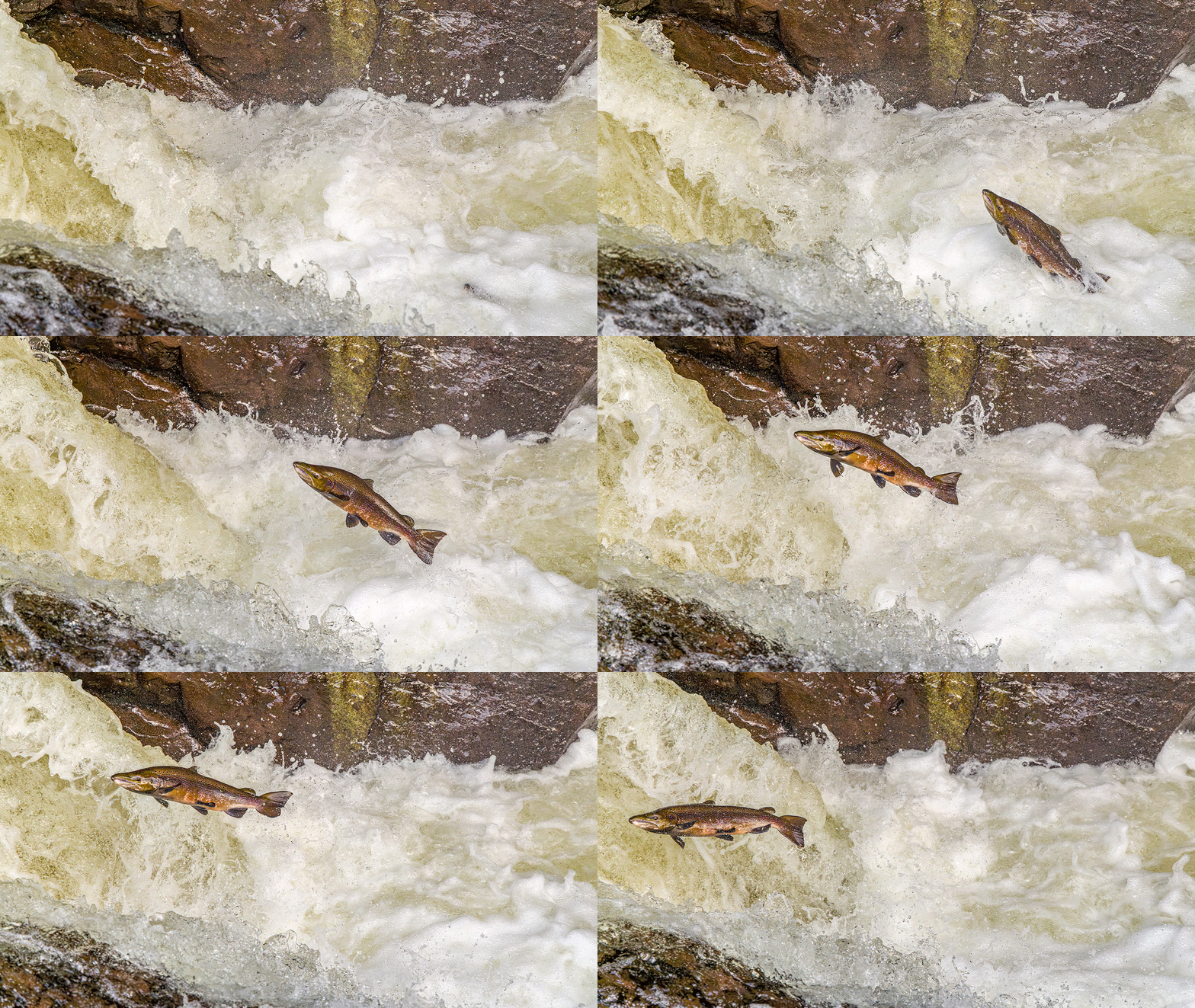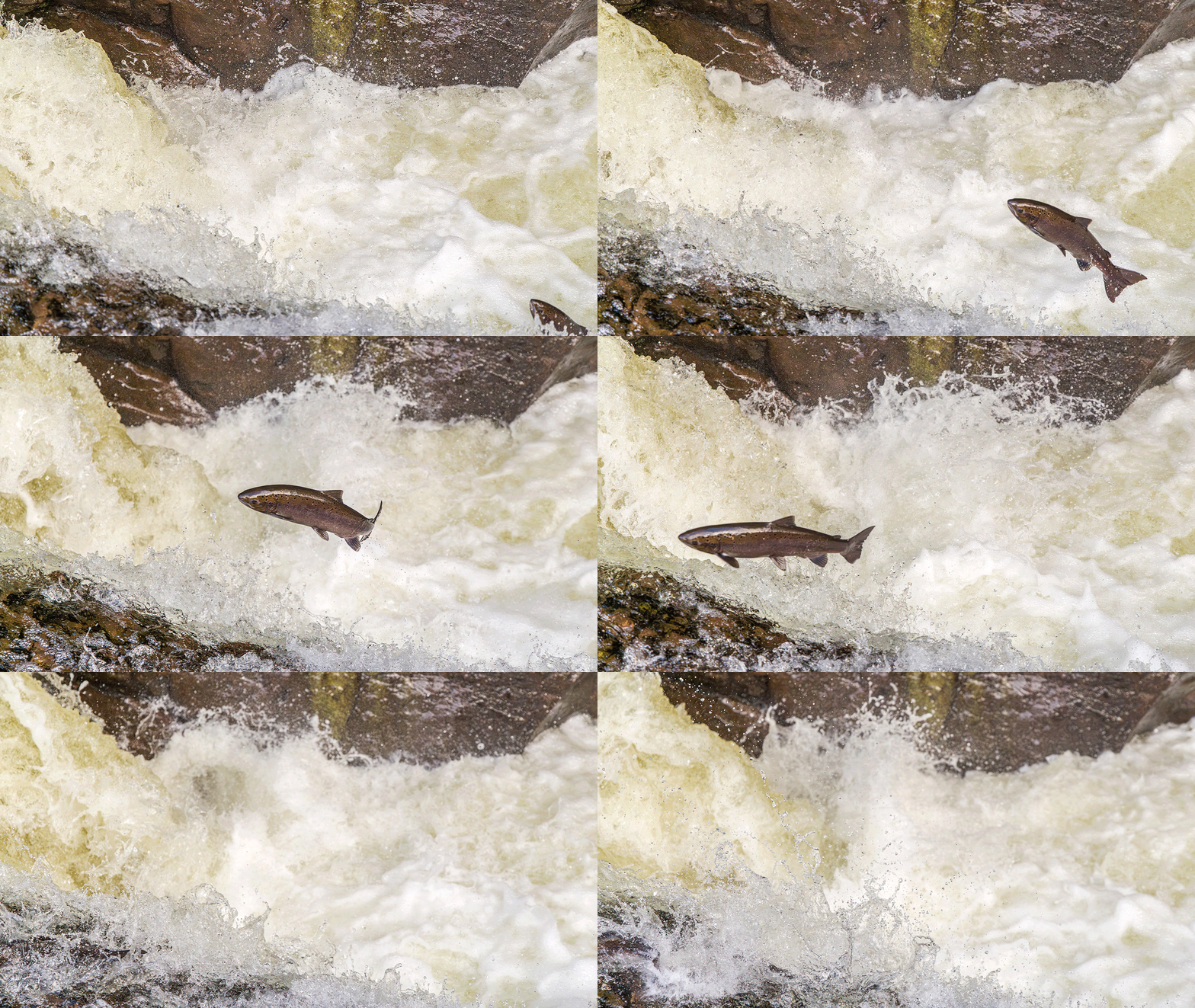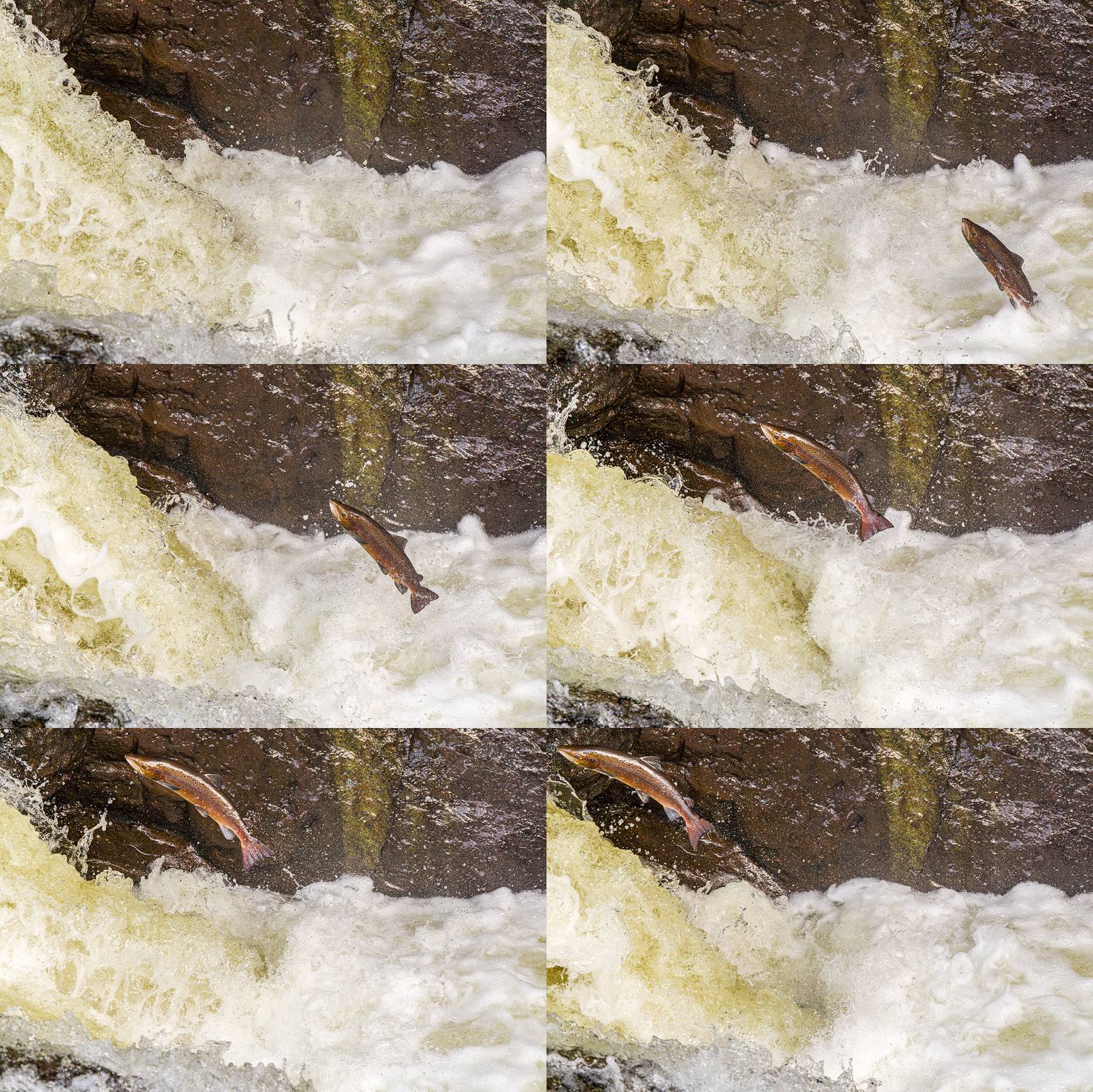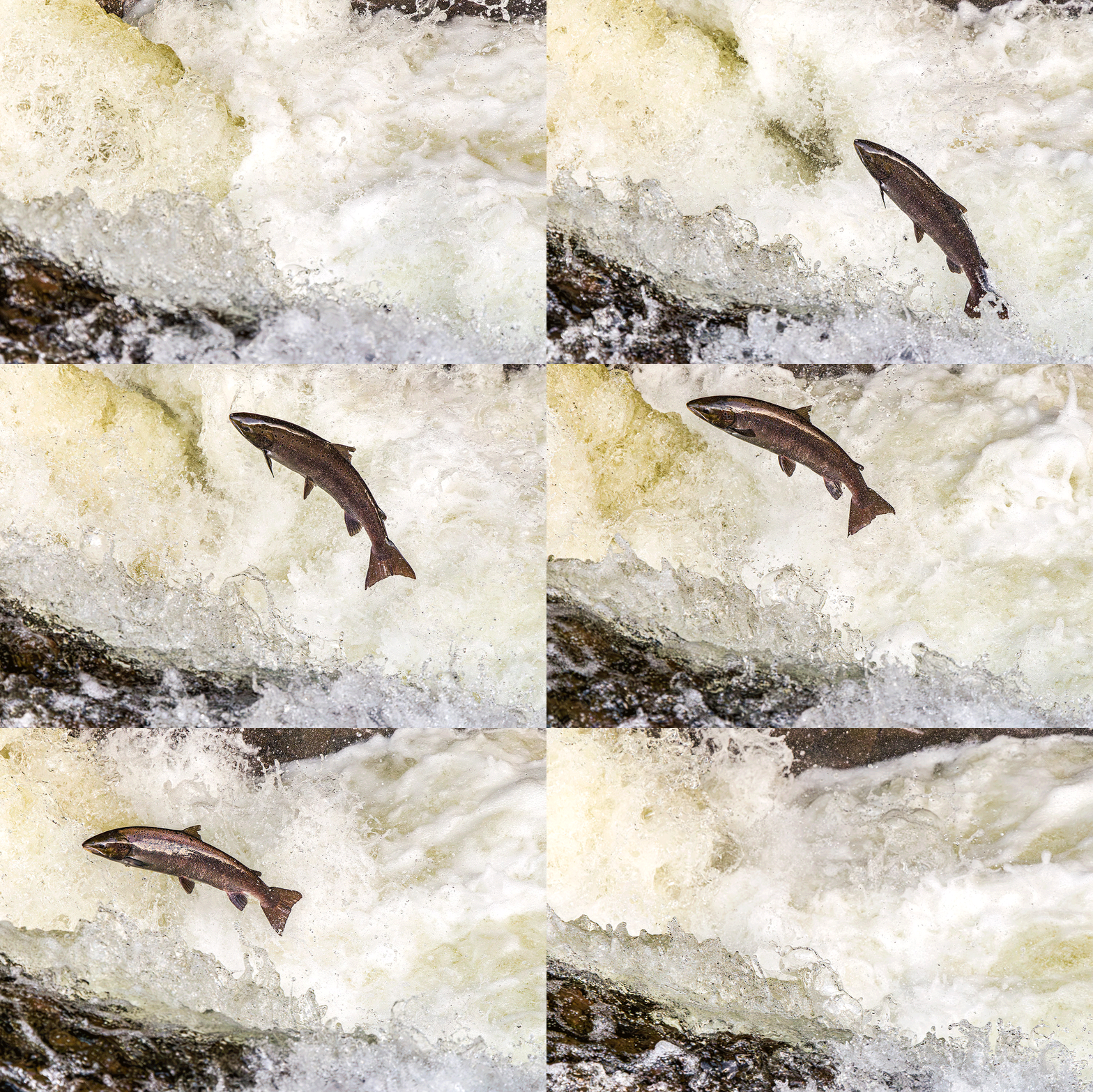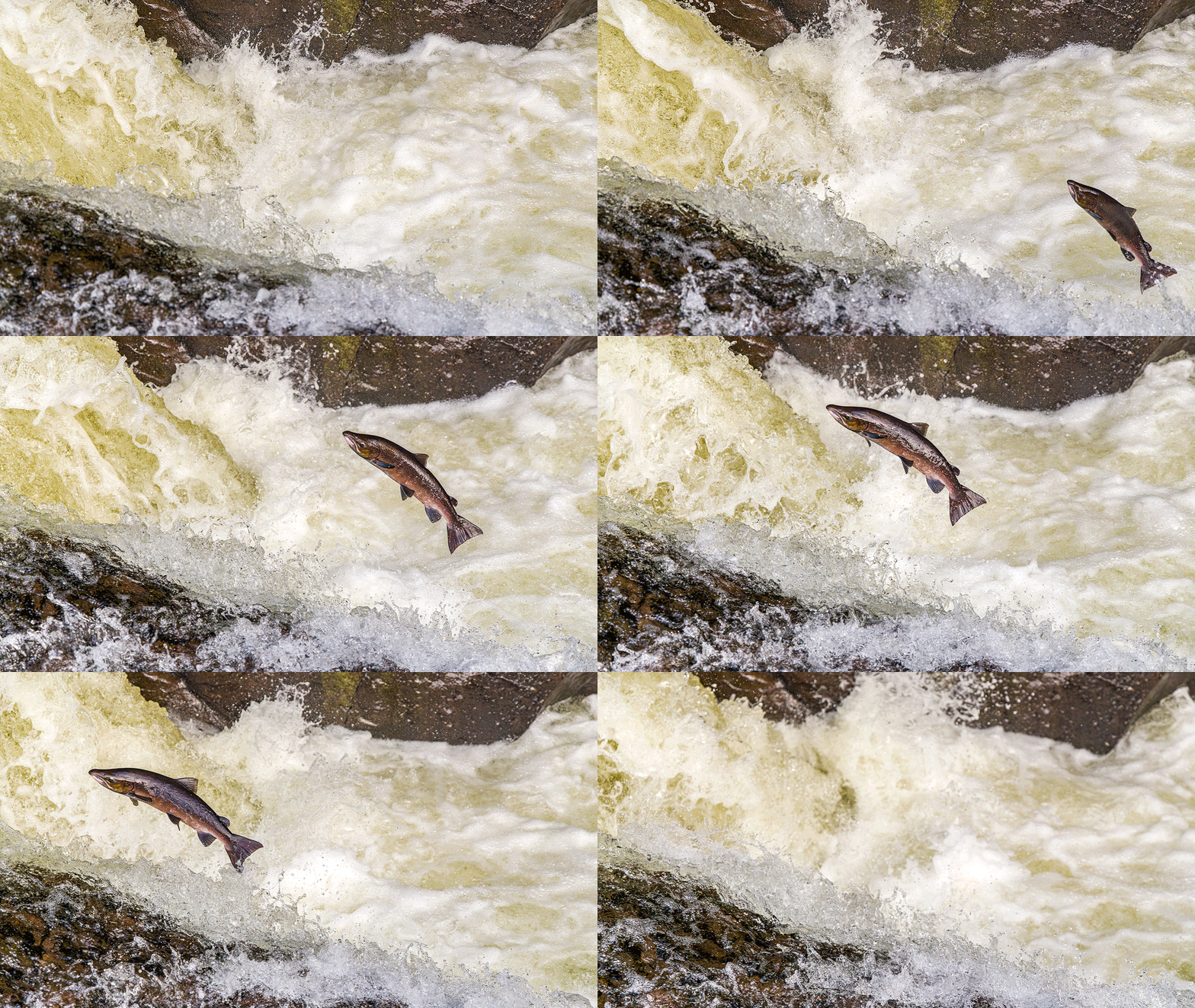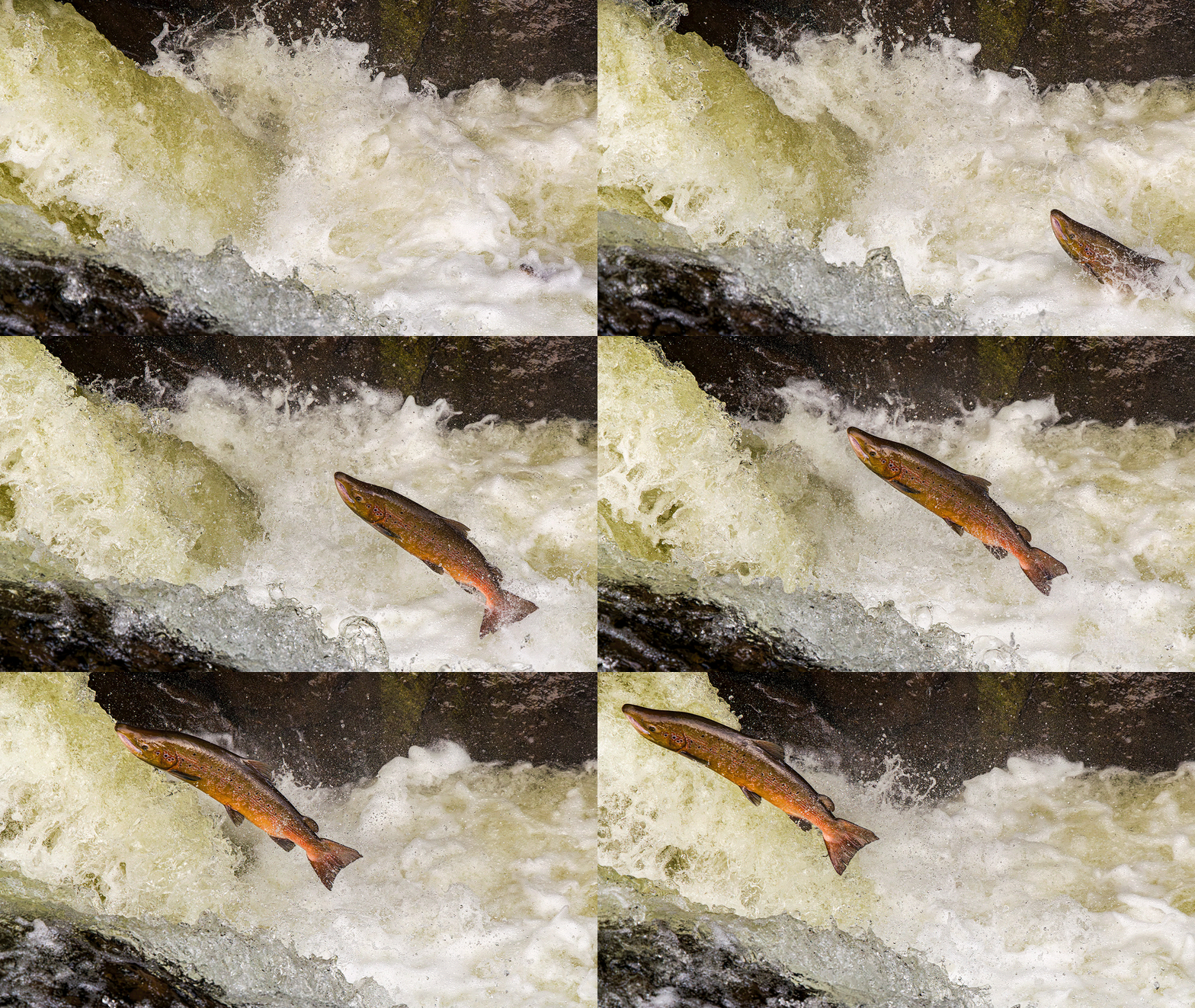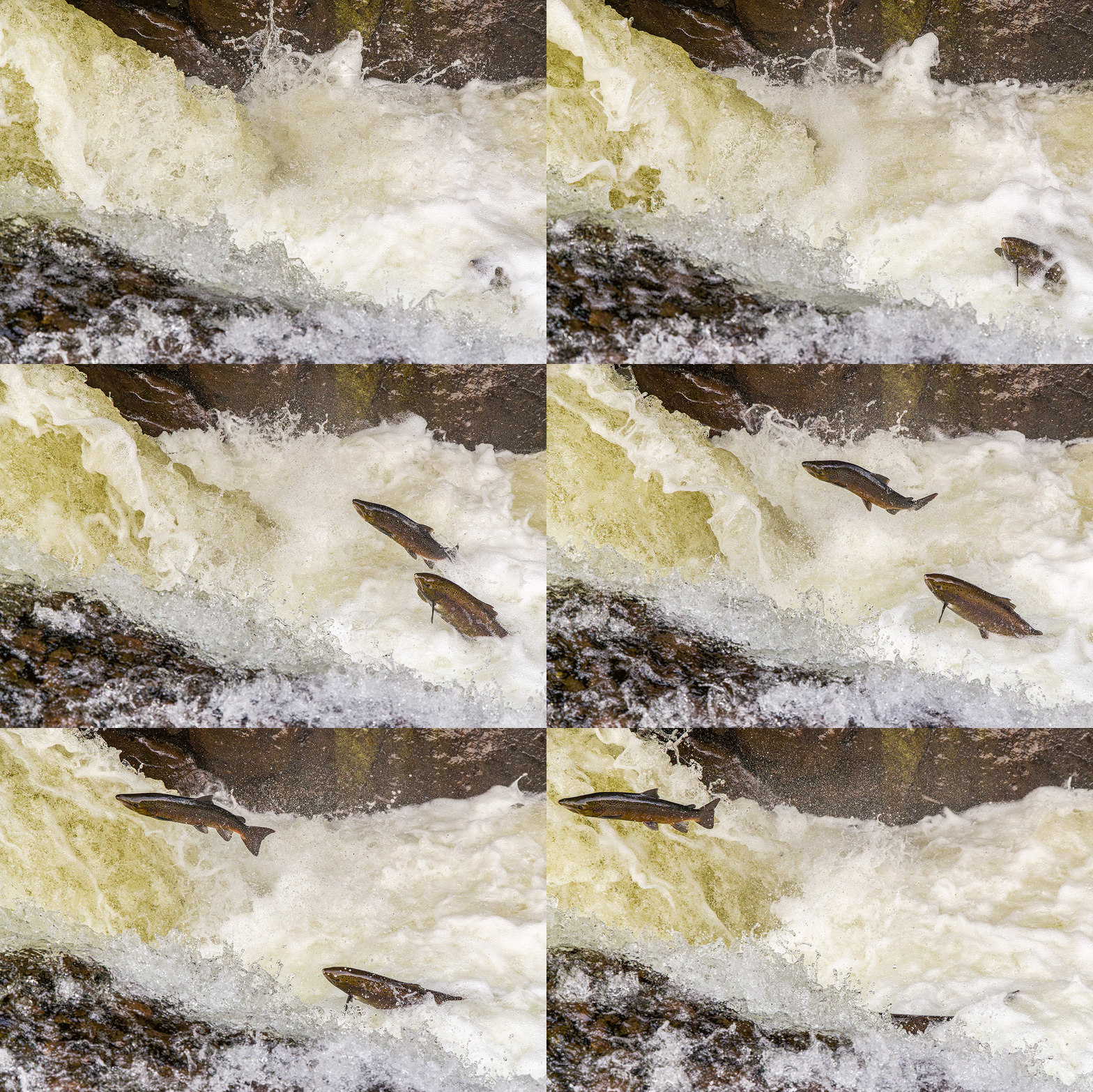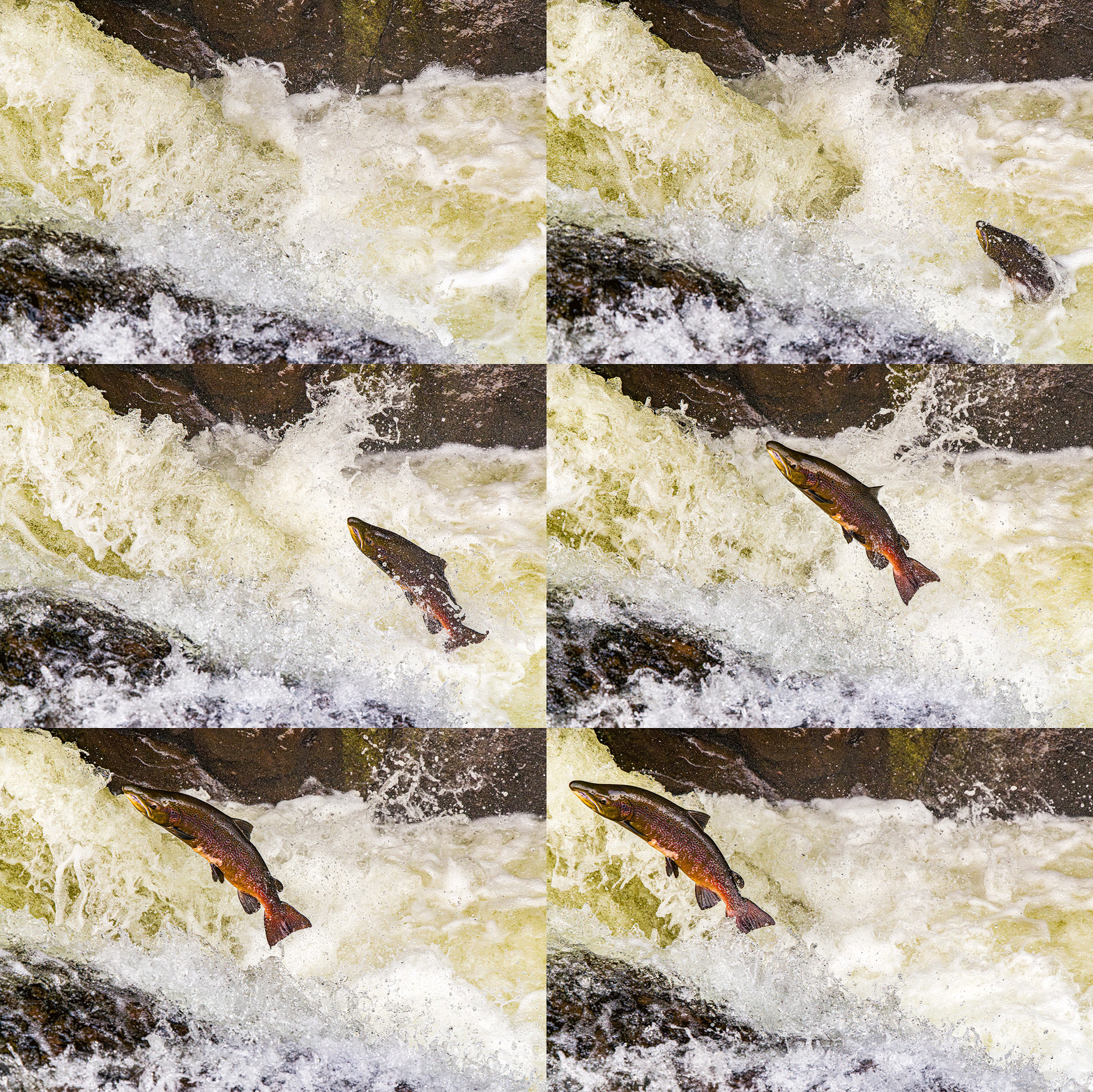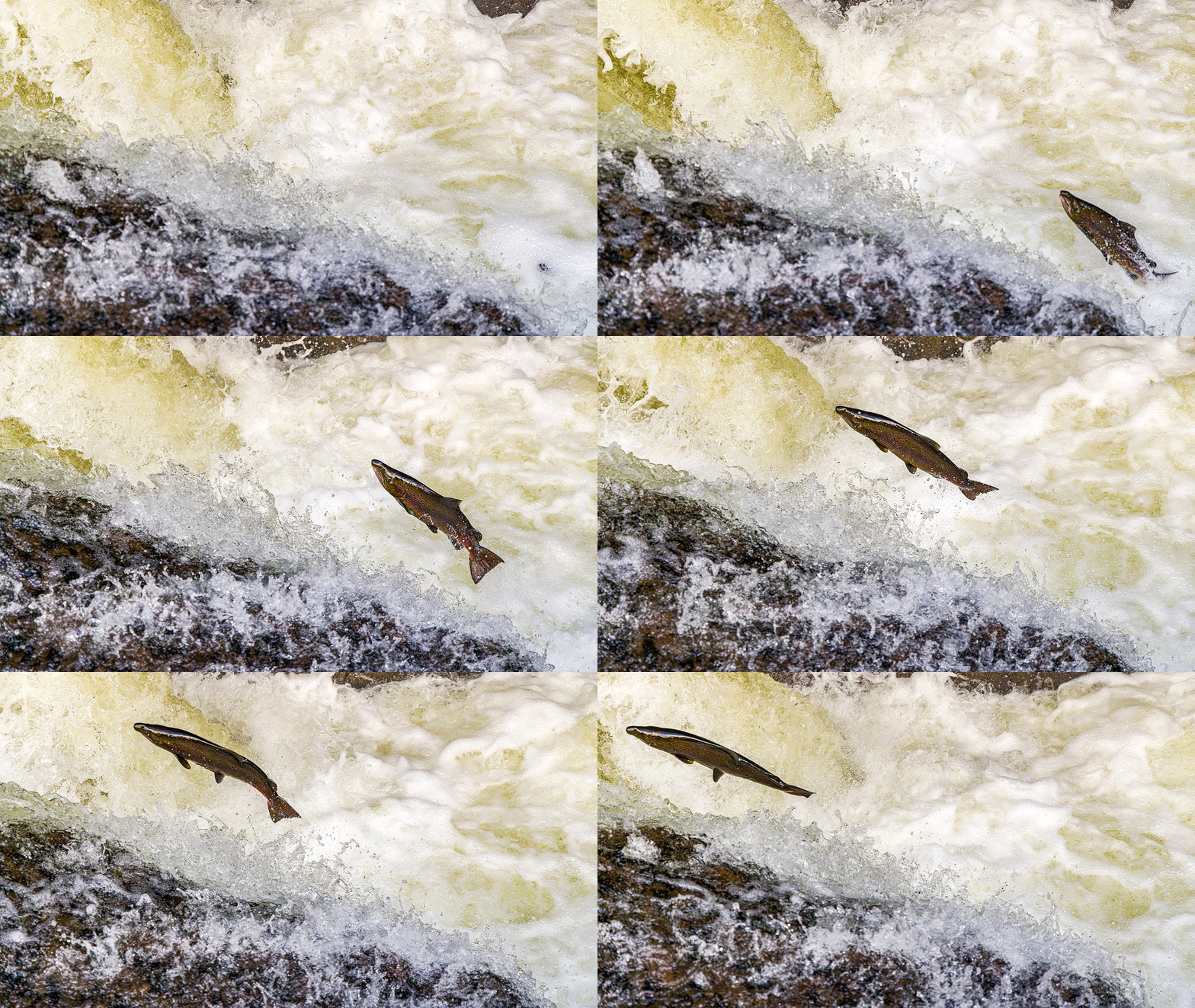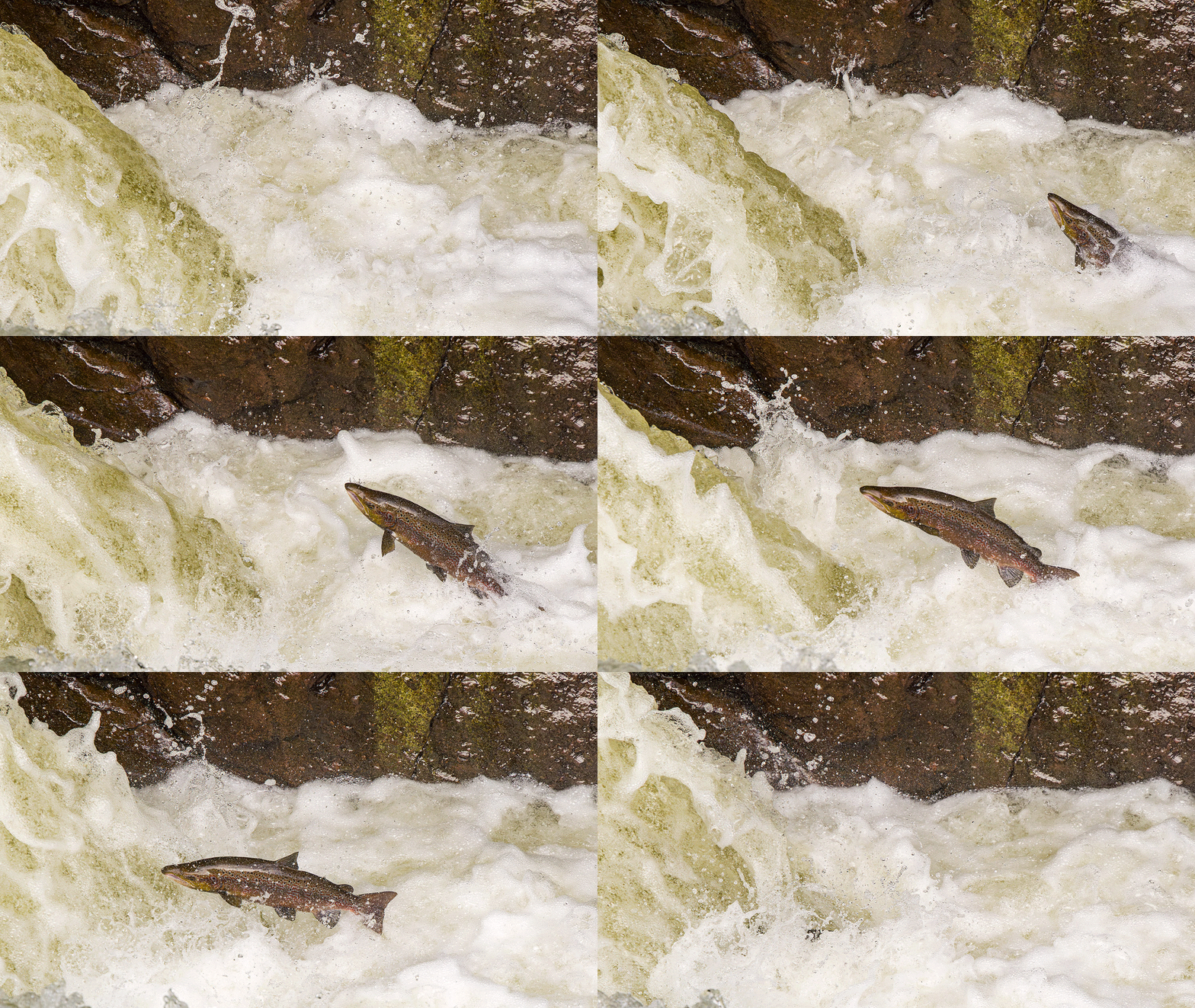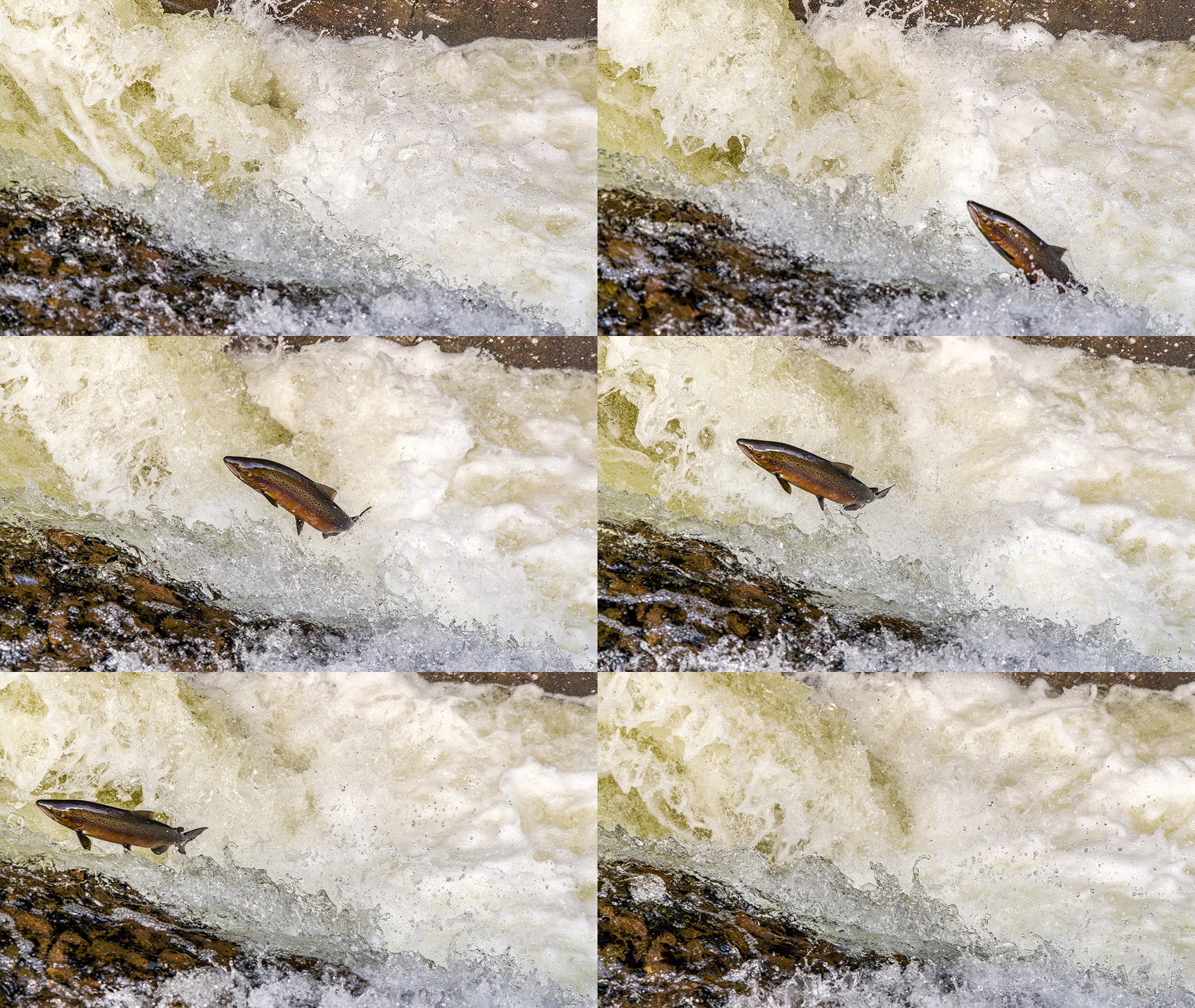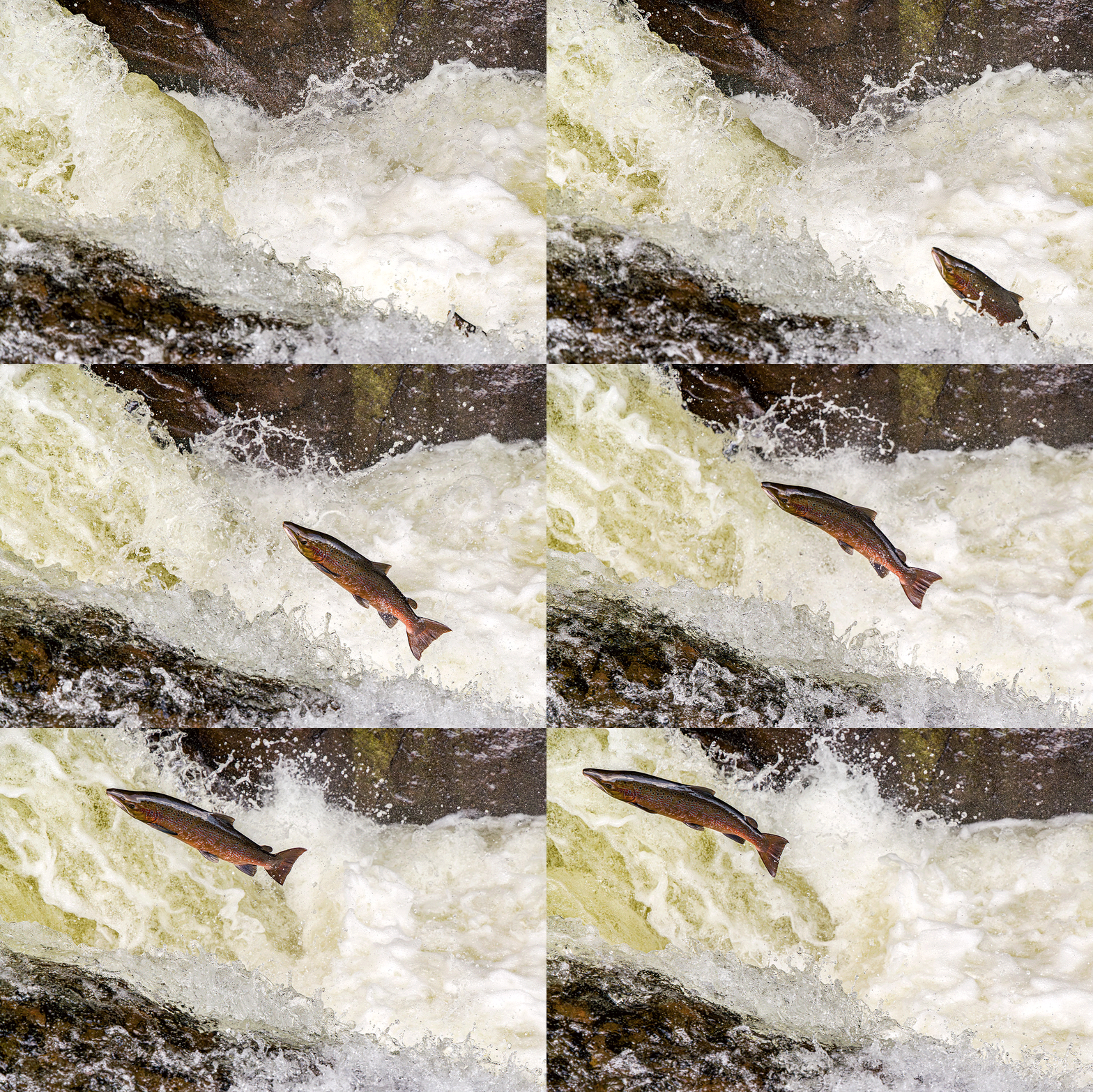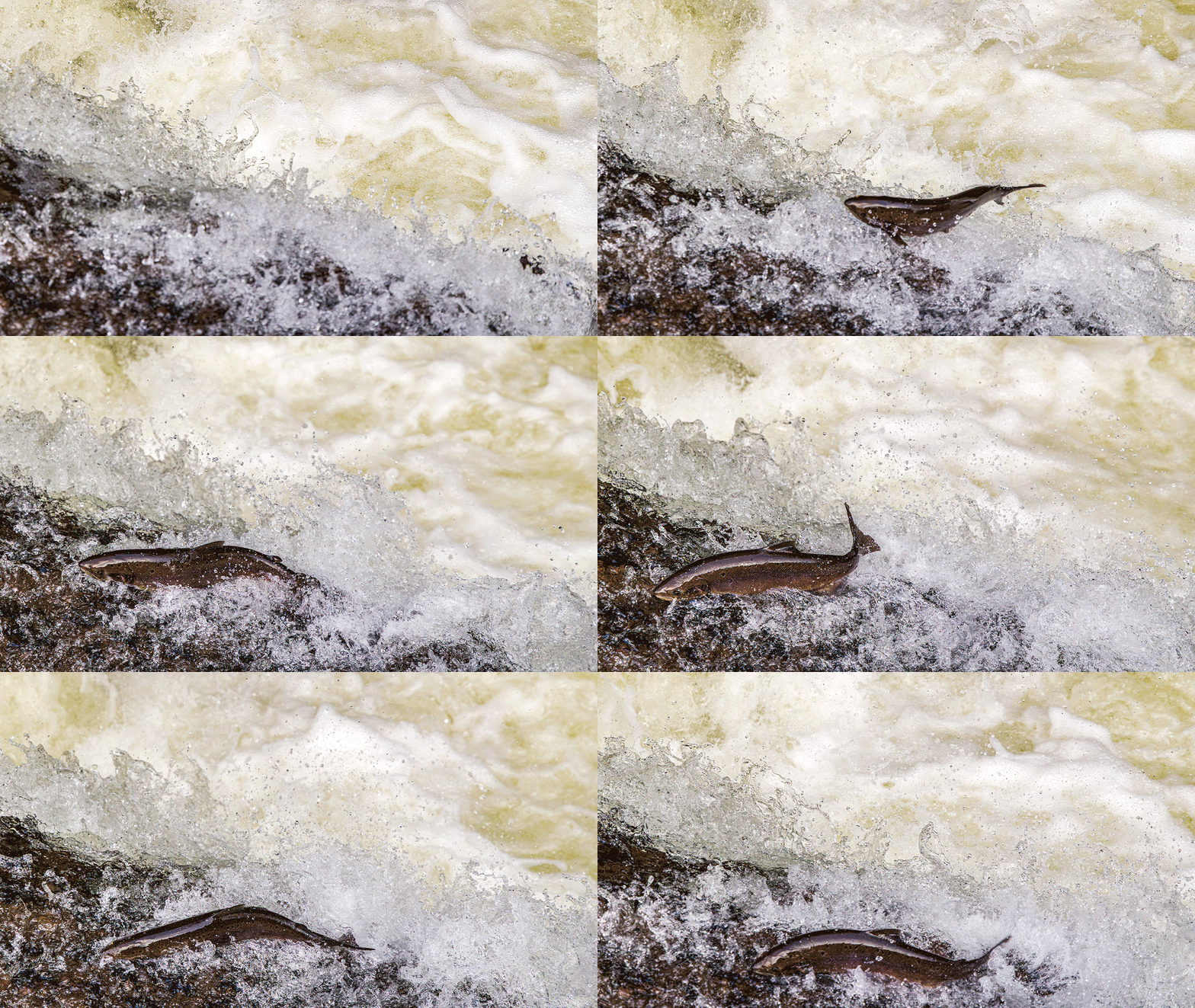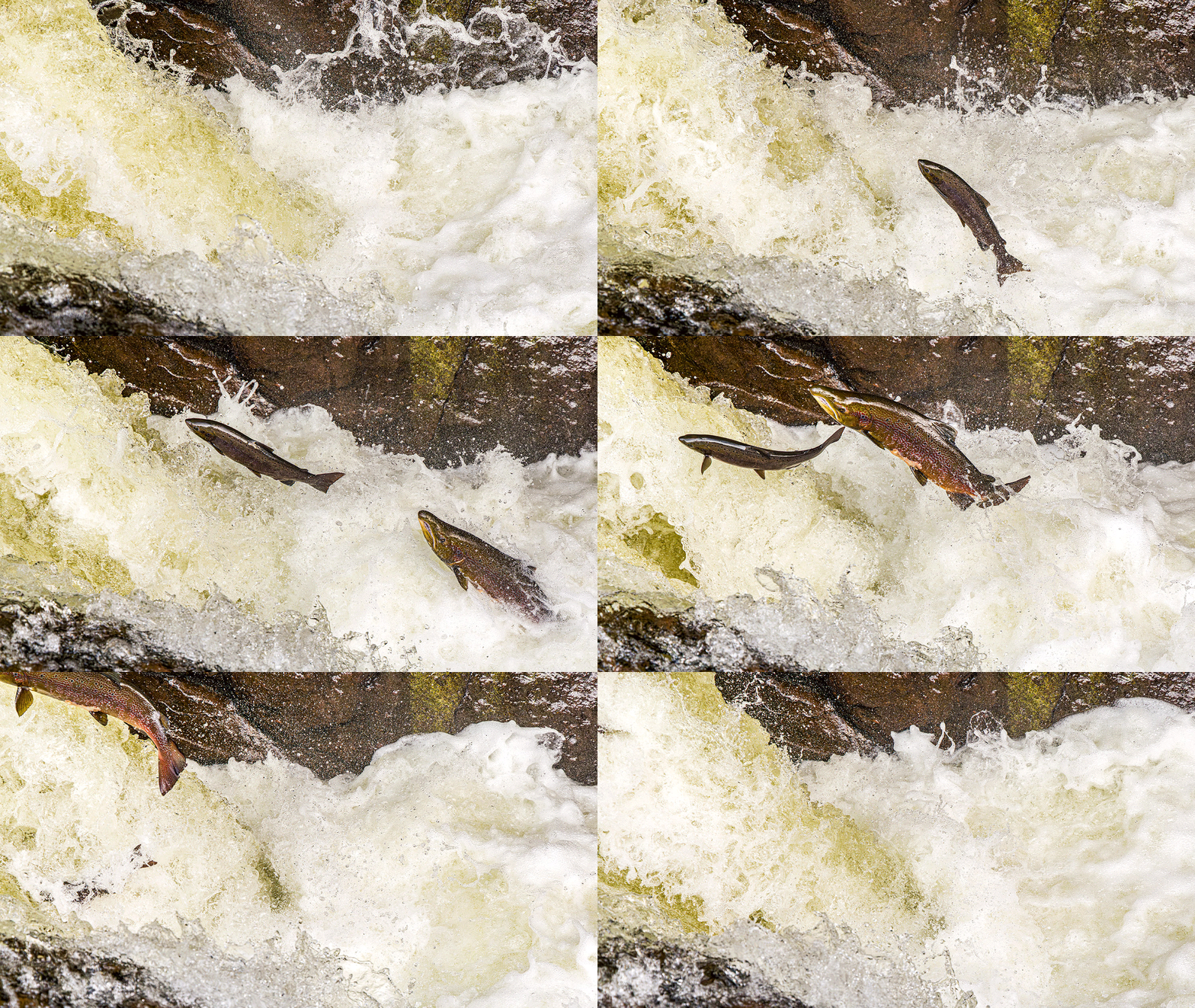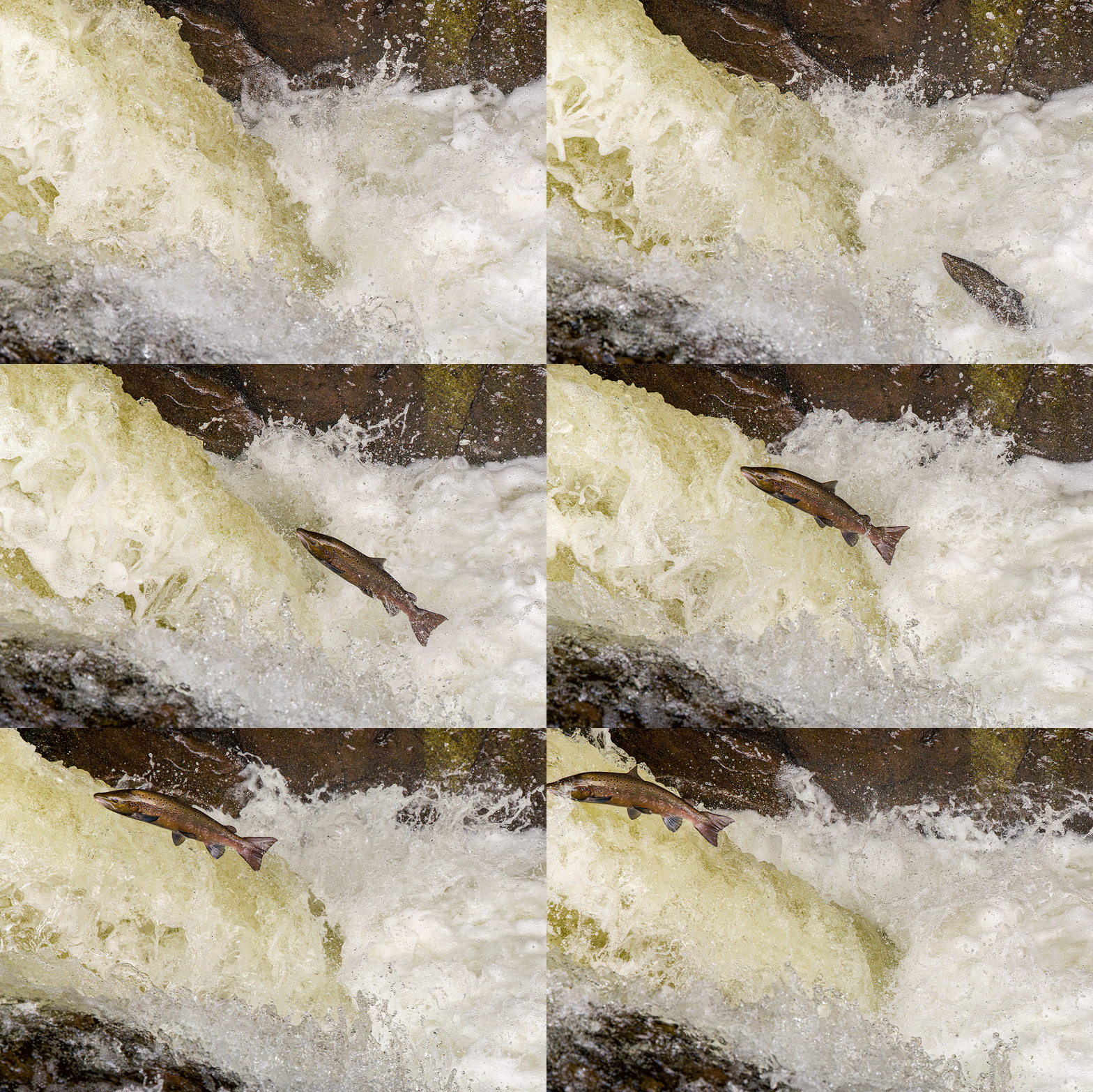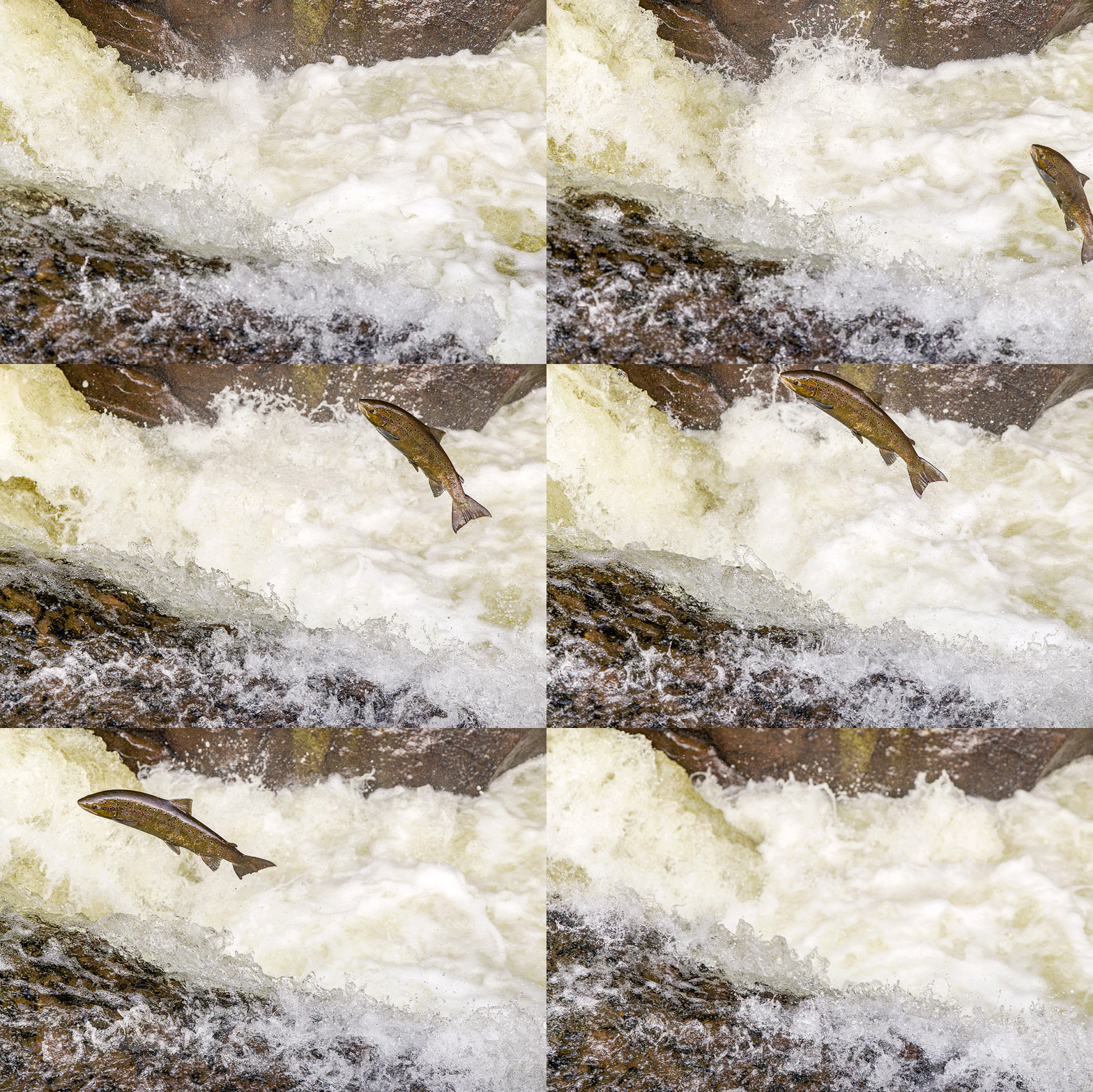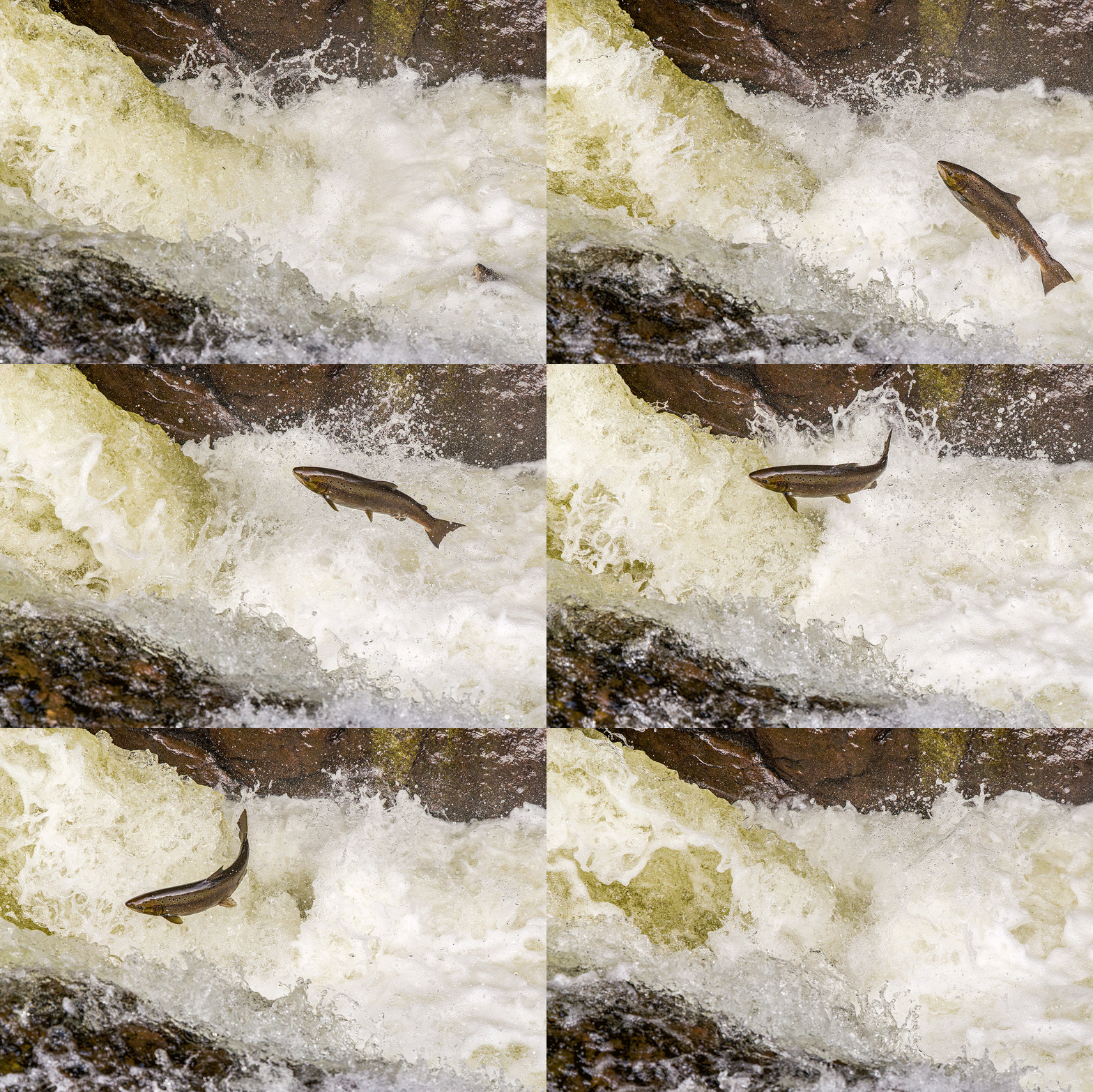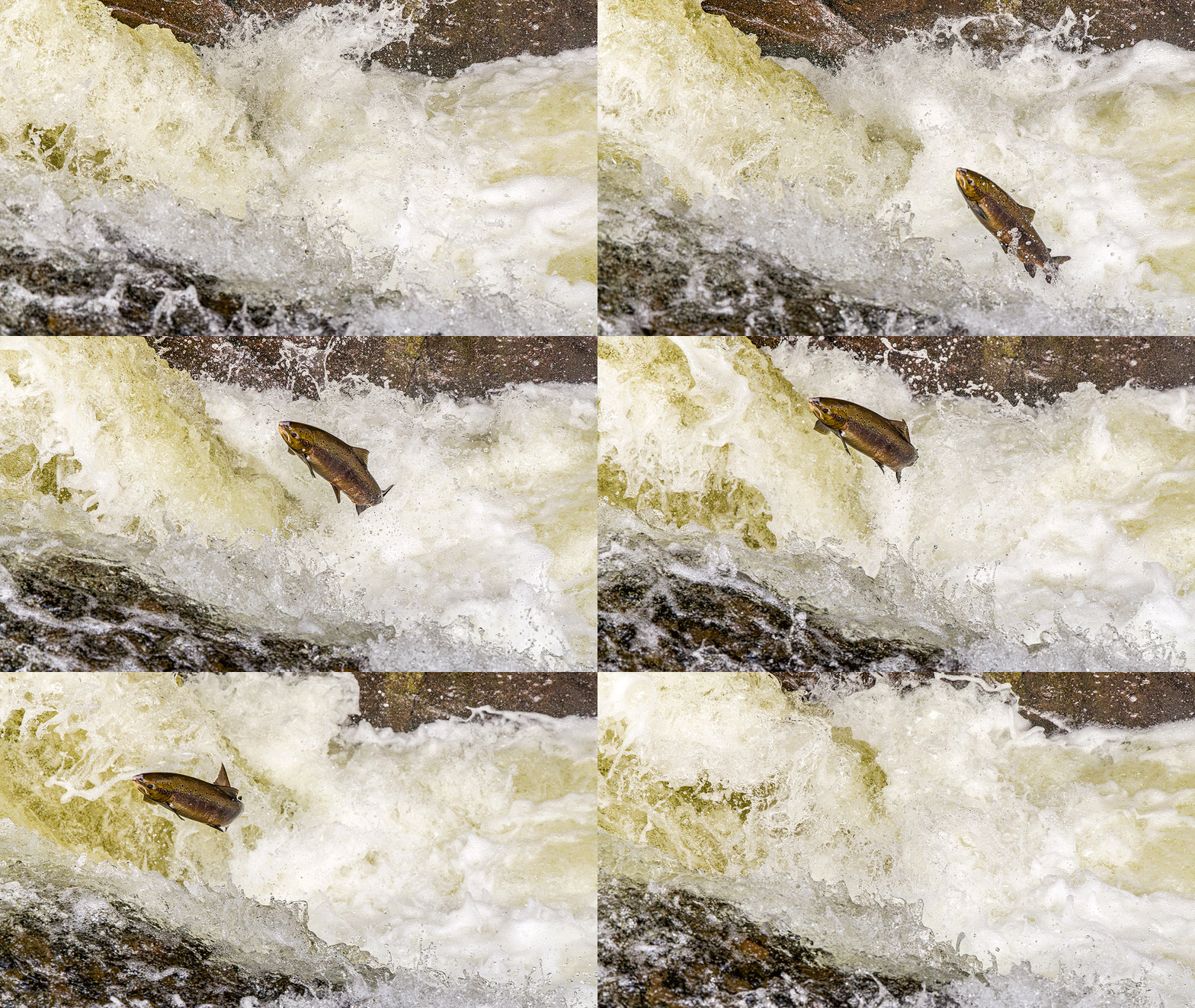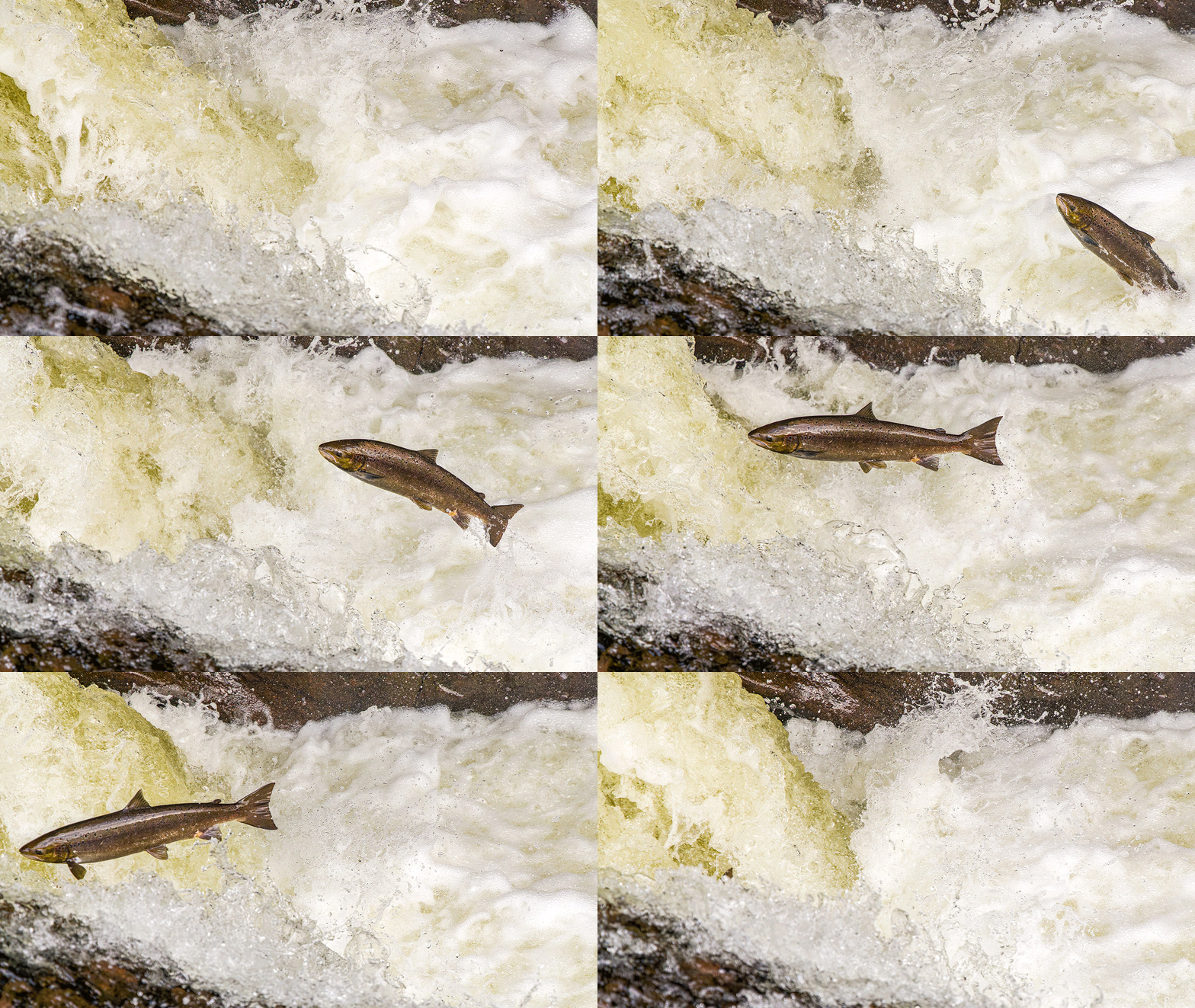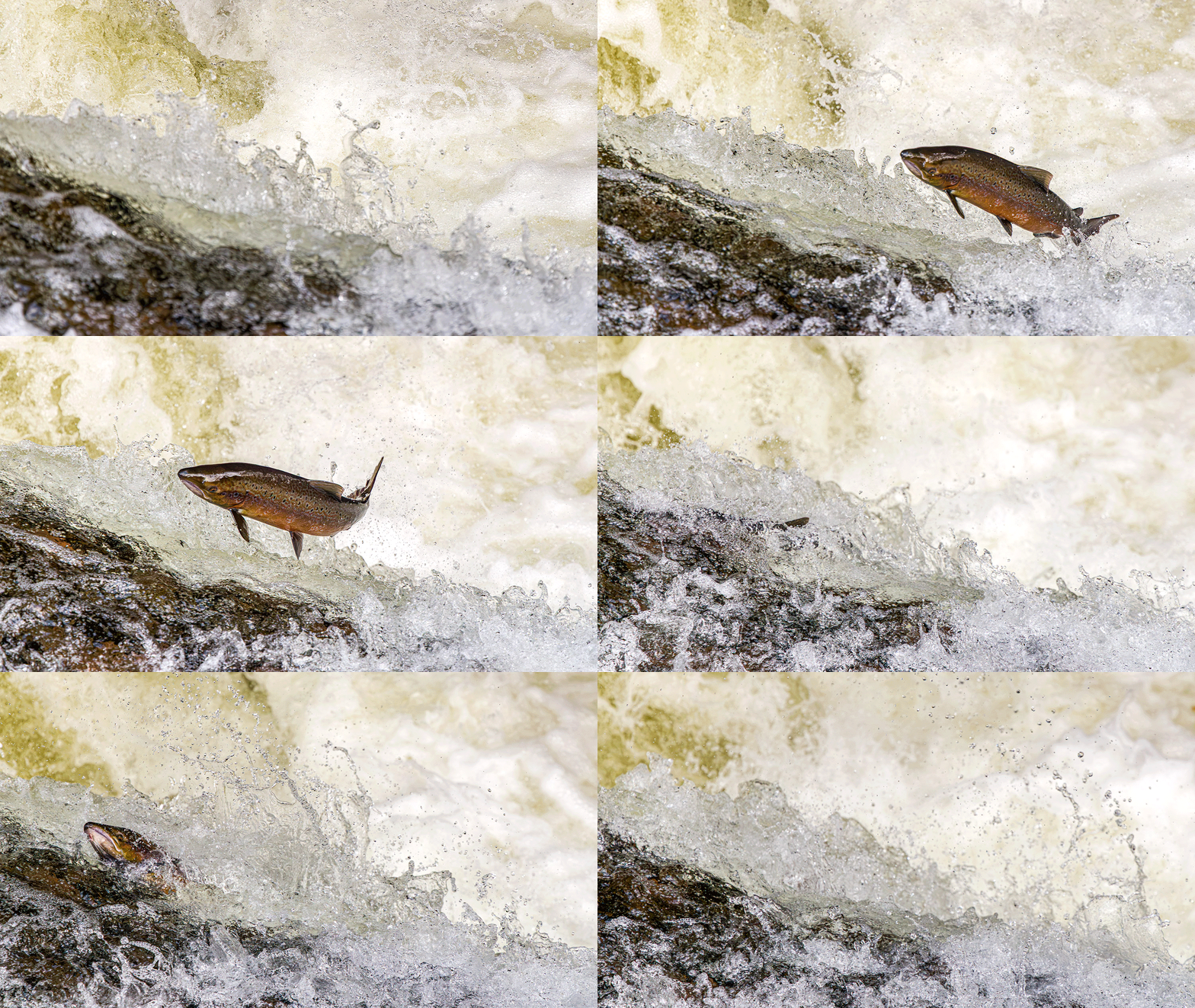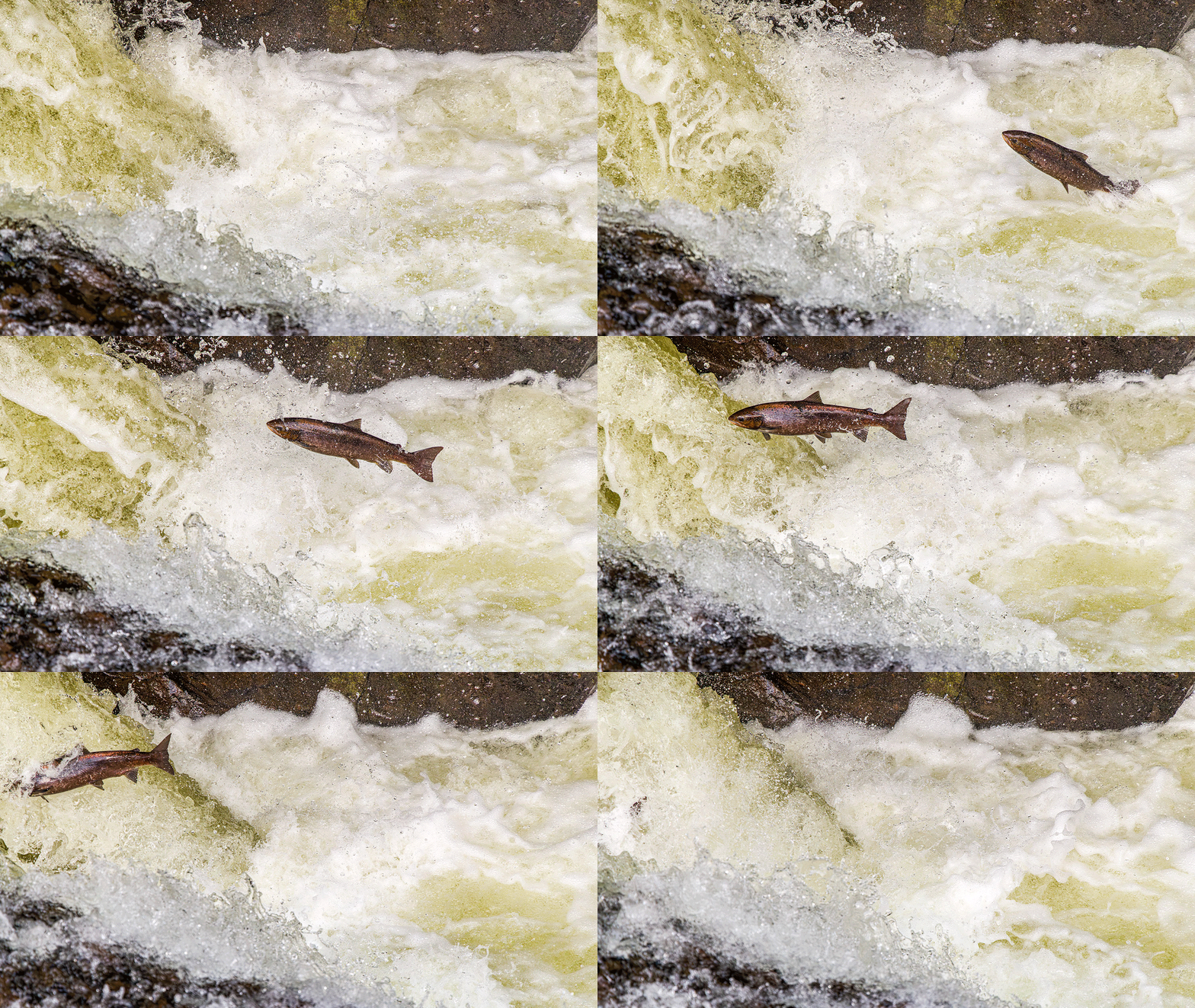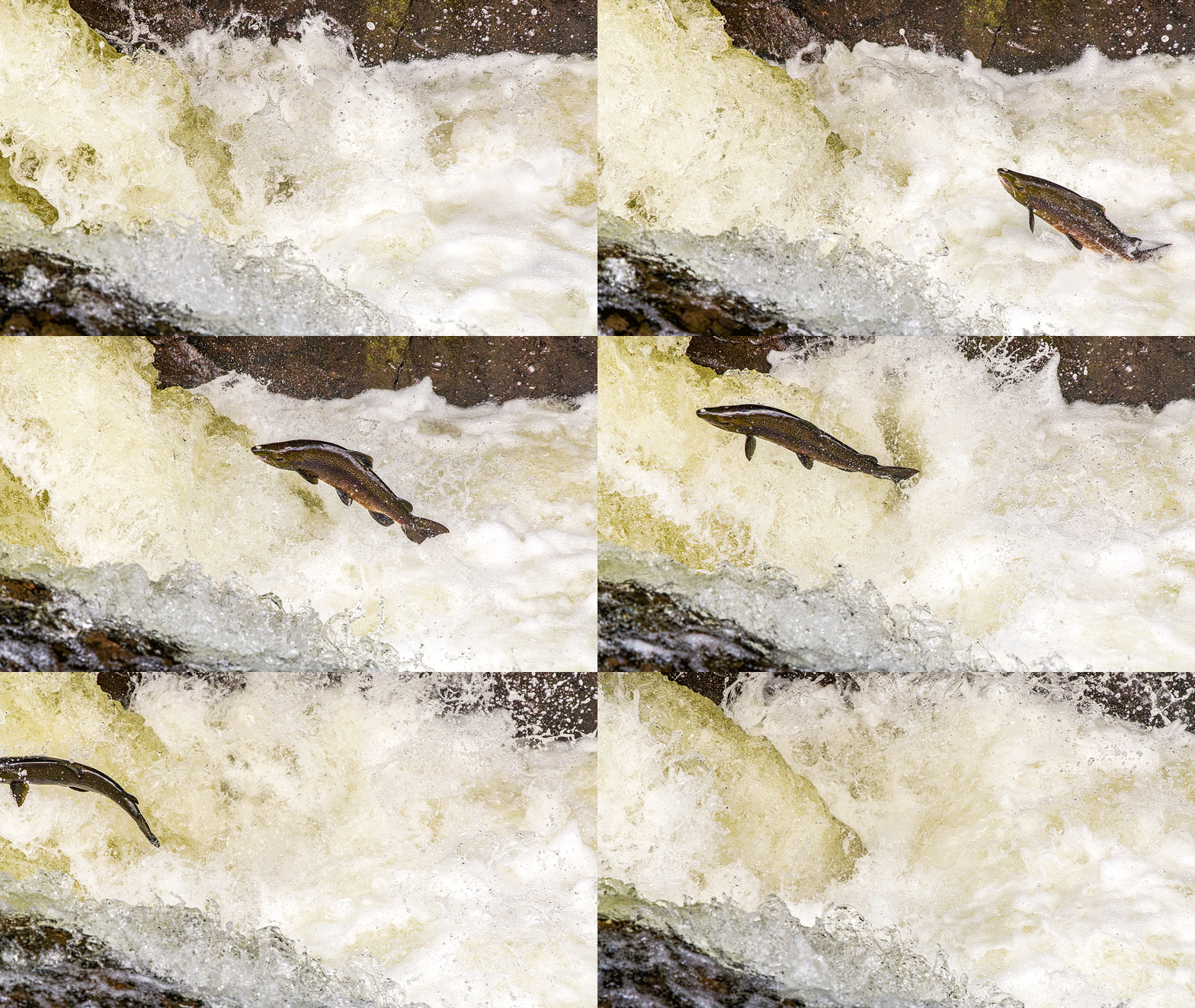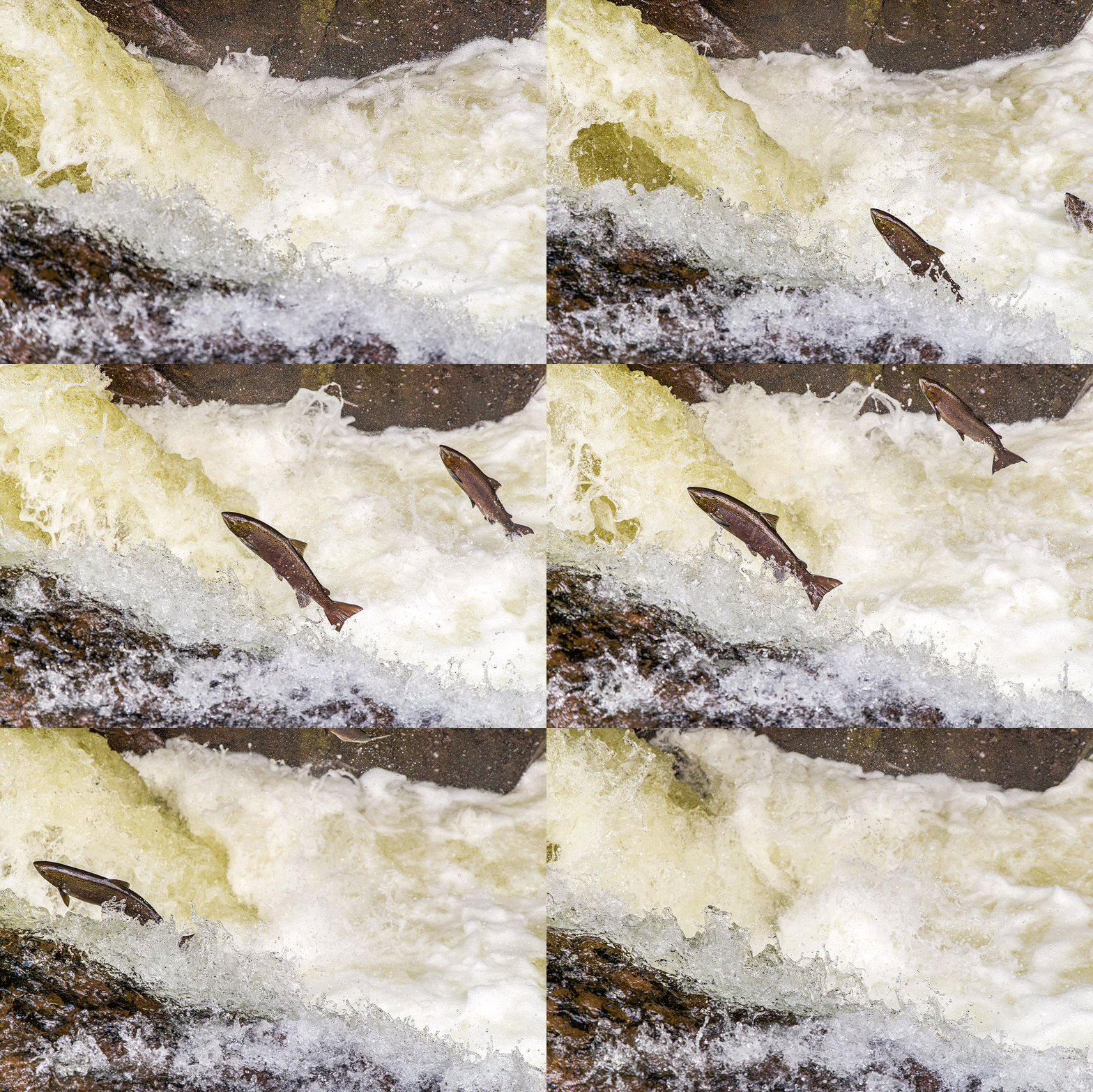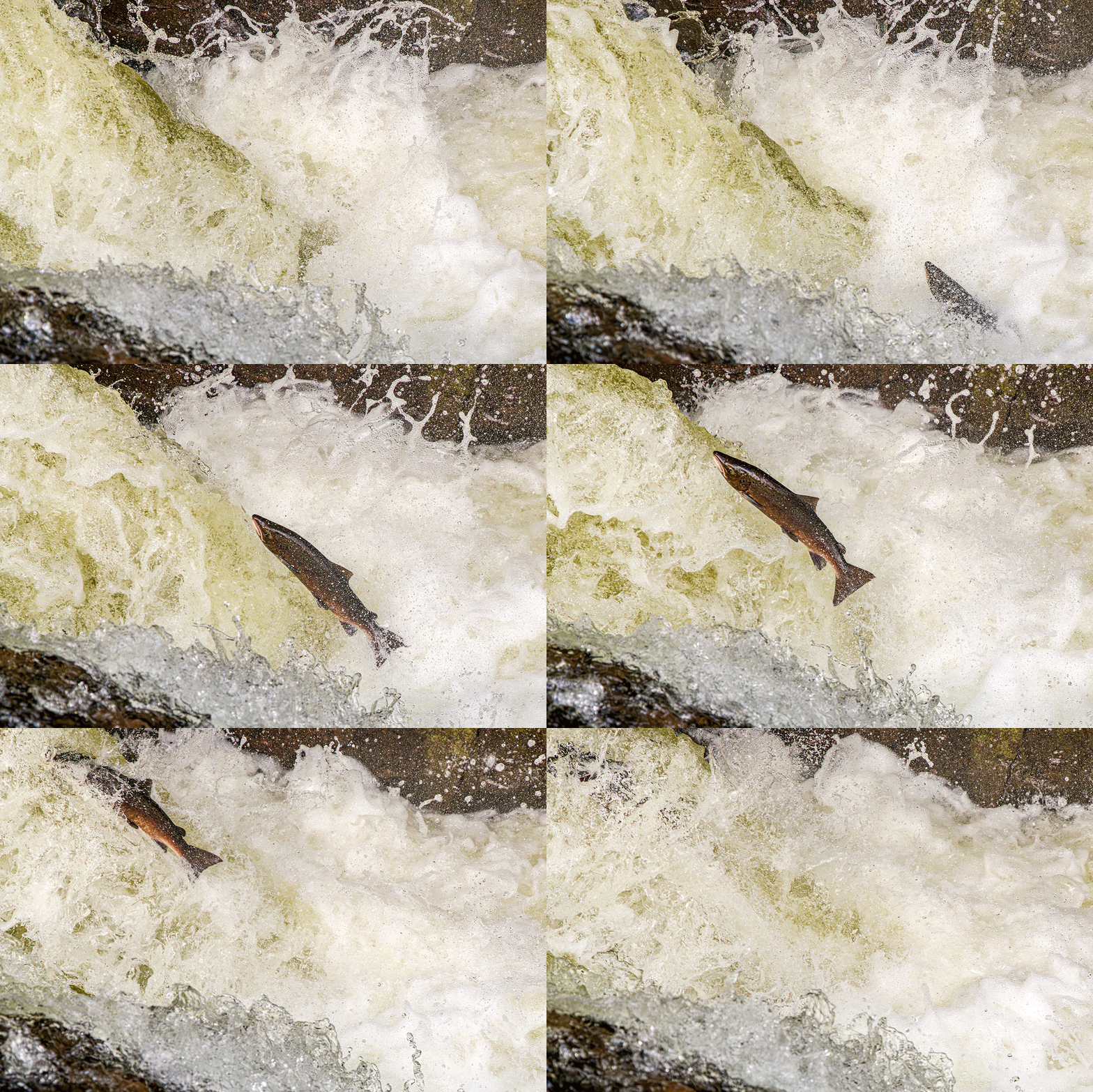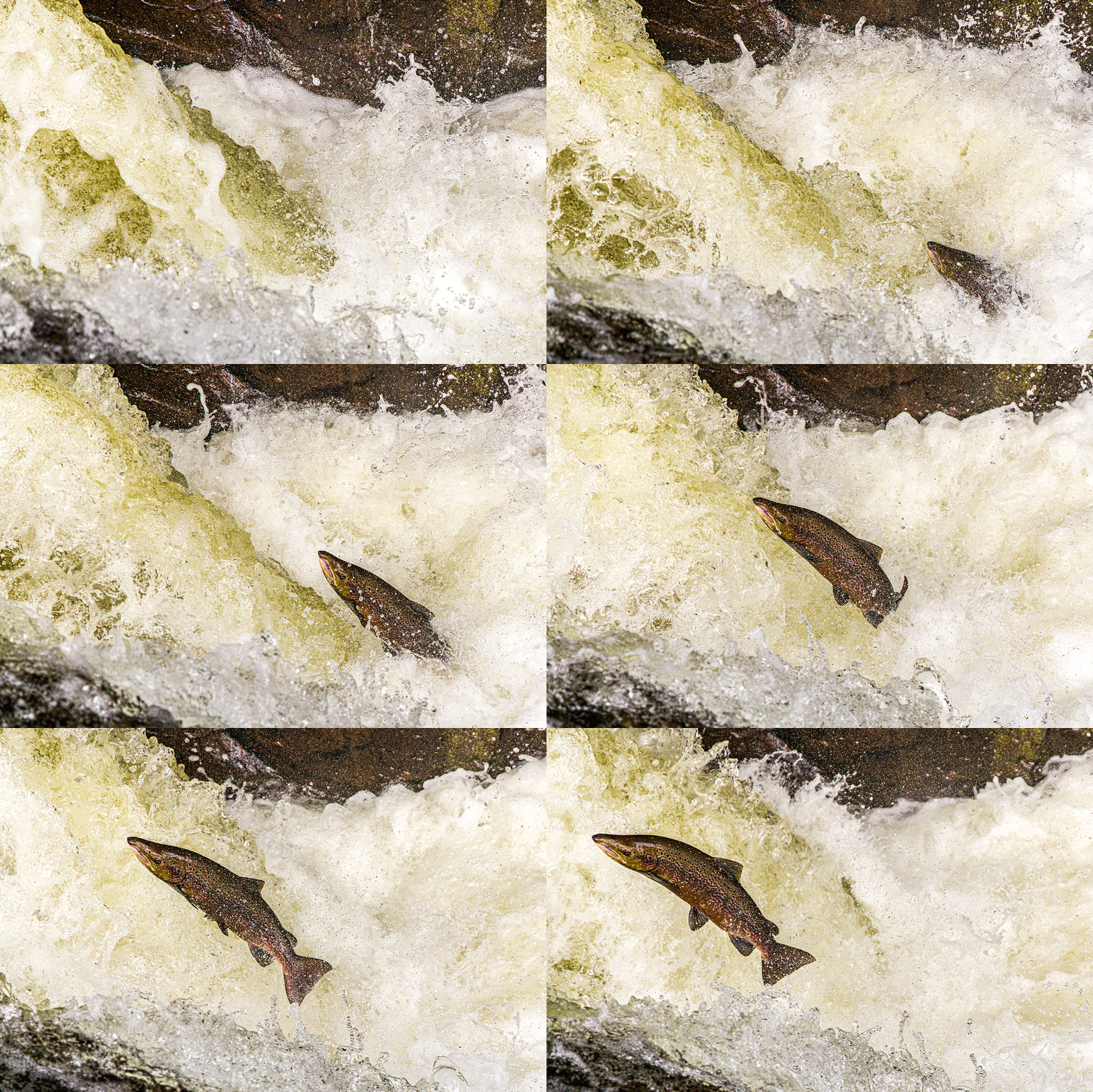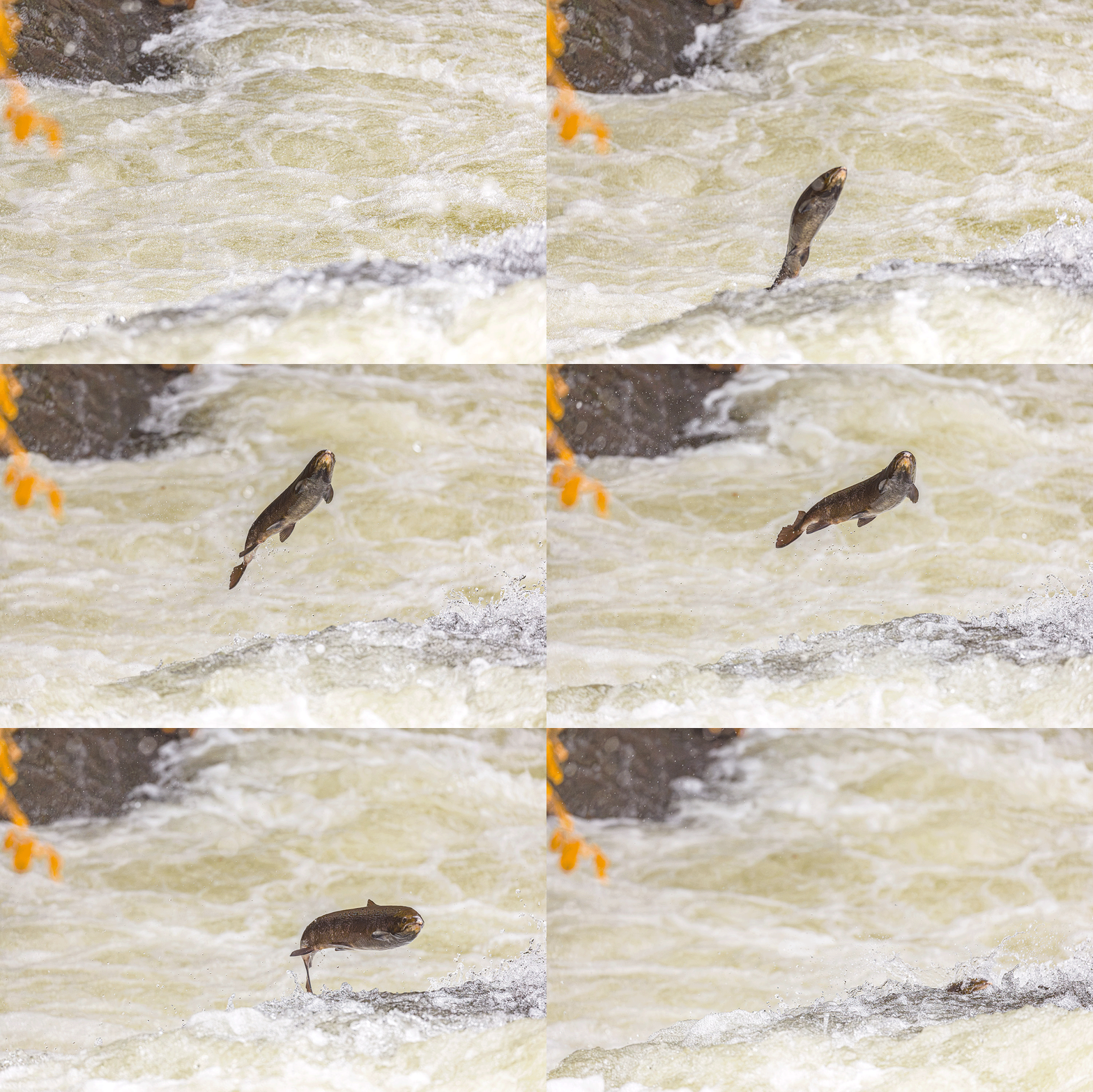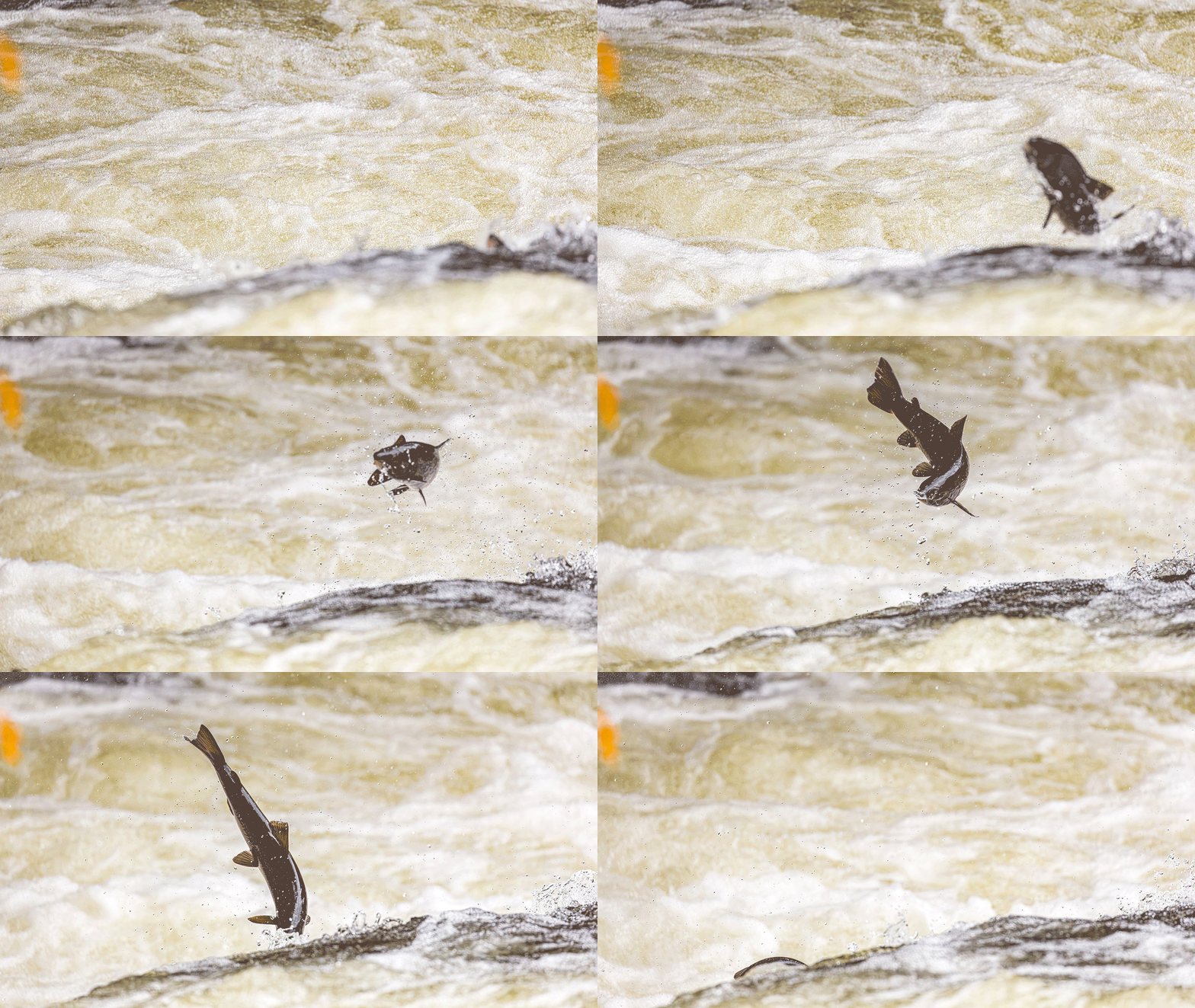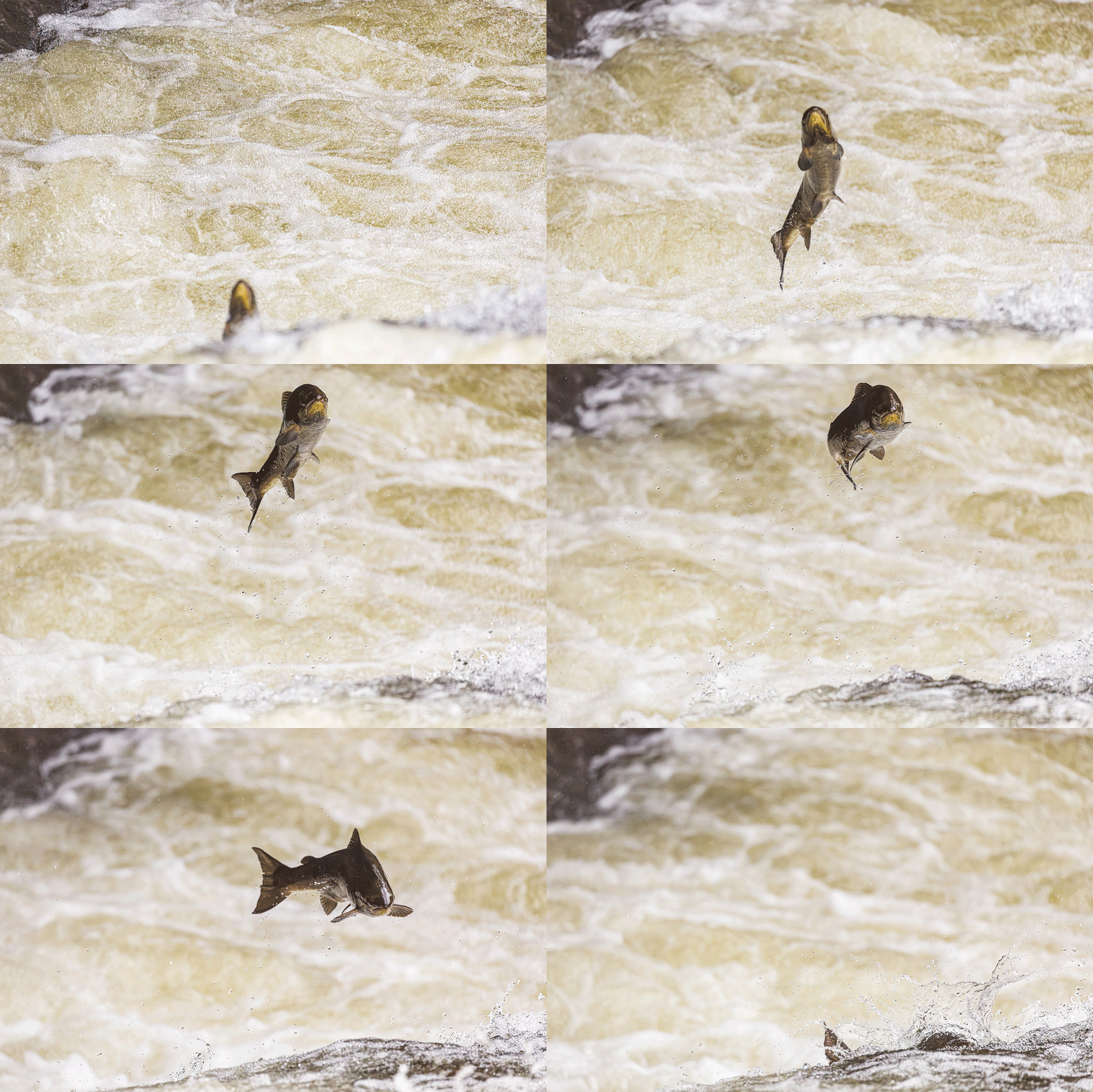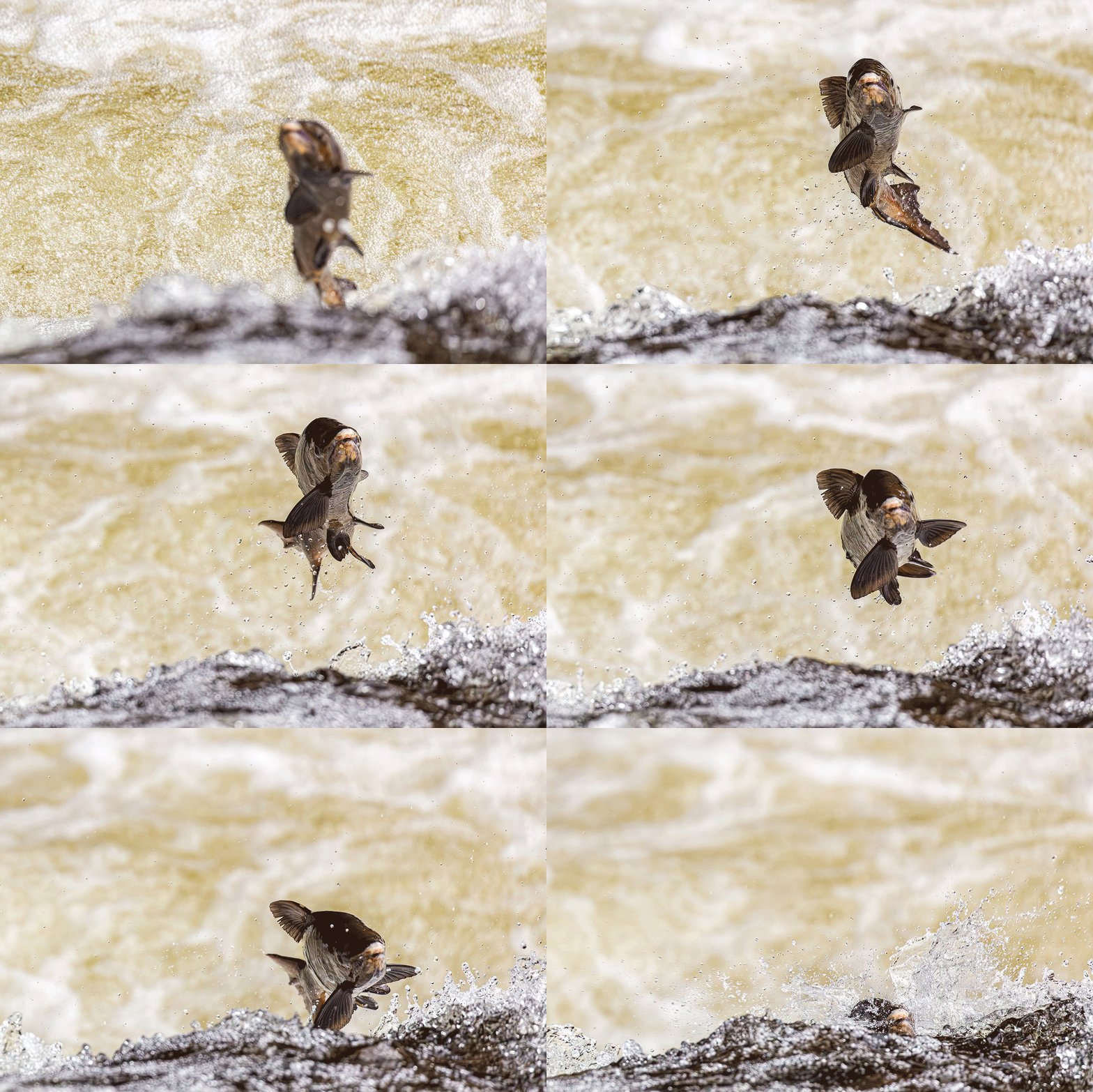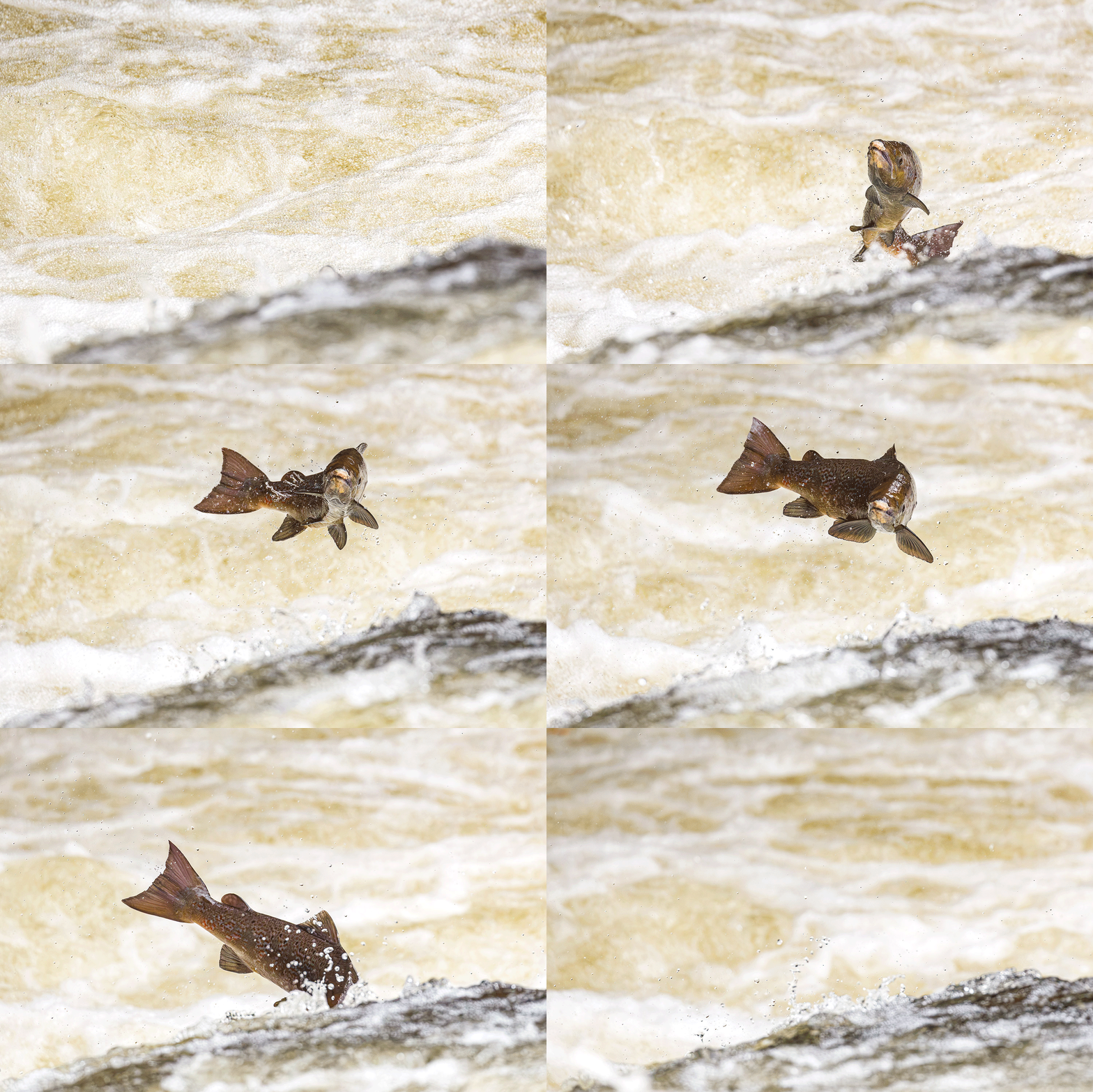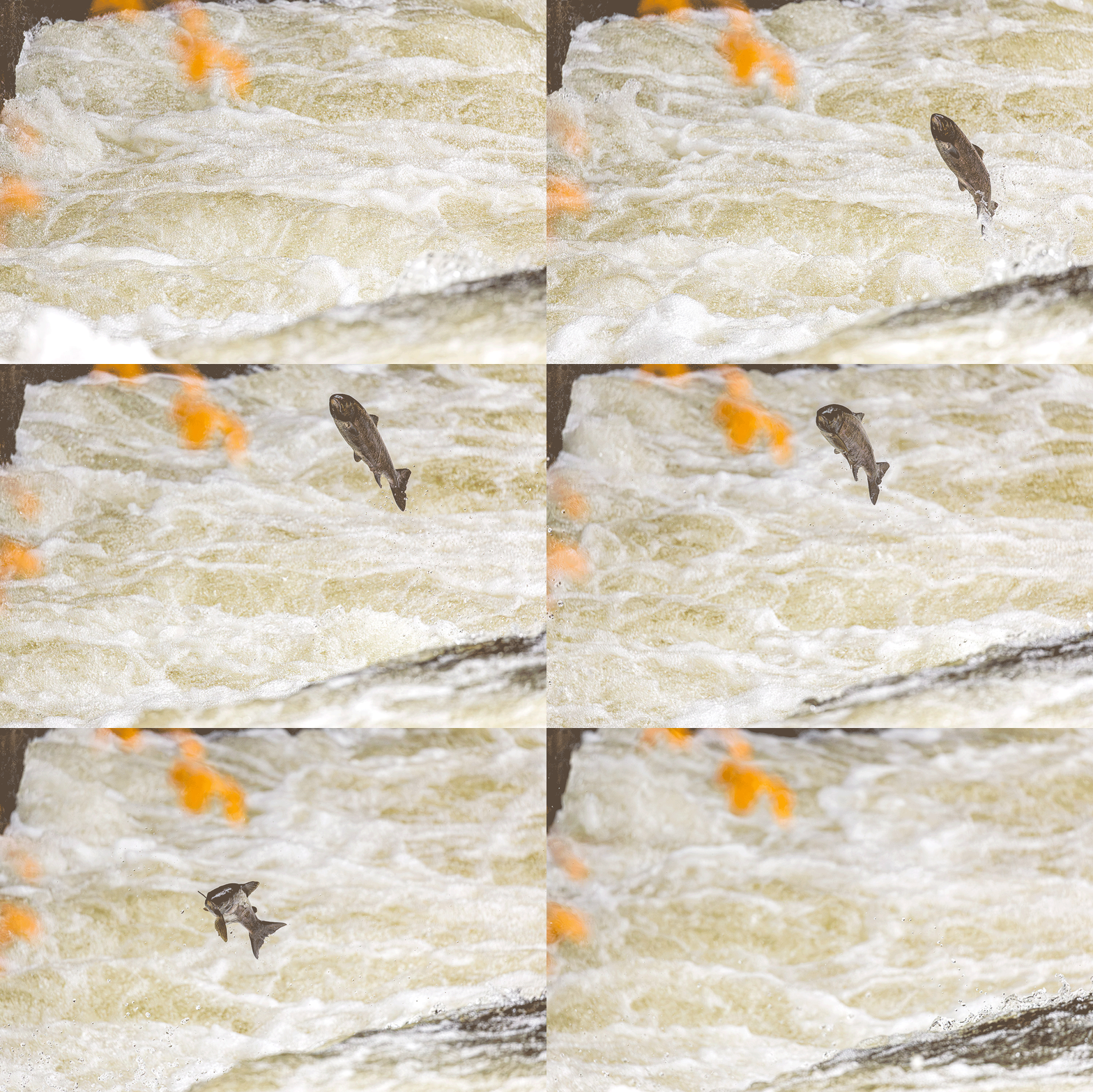
A return trip, to experiment further with lenses and settings for action shots with the Canon R5 mk2. Gauge just over 0.4 m, a couple of inches higher than 14 October. Fish supply reasonable. Light conditions disappointingly low in the spot, given it was bright elsewhere. When it did brighten briefly, it seemed to stop the fish jumping.
One interesting difference from 01/14 Oct was there were far fewer fish crossing over and slapping into the back wall. A water level thing???
For the adjacent location shots, lens was Canon RF 24-105 mm f4 L IS. Shutter priority at 1/2000s. Pre-Continuous shooting set to 30 frames per second. AF set to flexible zone with the area adjusted to occupy as much of the water and as little of the rock (front shelf/back wall) as possible. A problem on 01/14 Oct was any rock in the box was catching the attention of the AF and hogging it. With only water to look at, it was much better at responding to a dark fish entering the box. AF configuration was set to animal recognition. AF Case was set to Manual, with Tracking Sensitivity set to +2 and Acceleration/Decelearation Tracking set to +2.
I noted a common theme when reacting to a new fish entering the box when the focus happened to be a long way out, initially. For the first 4 frames (4/30 sec), the fish would be out of focus, as AF was still seeing water, either in front of or behind the fish. Between frames 4 and 5, AF would snap to the fish. Occasionally it would be between frames 3 and 4, and occasionaly between frames 5 and 6, but between 4 and 5 was its favourite. Whether the lens had to come in from further away, or go out from close, seemed to be much of a muchness. Tradition has it it’s a better success rate when having to go out from close to further.
Hit rate with the RF lens was much better than the EF lenses used on the last 2 occasions, despite being f4, compared to EF lenses of f2.8 and f2. It was also better than the RF 45 mm f1.2. I am sure that is due to using it at a focal length of 70-90 mm. I think the fish is too small at 45 mm, and does not stand out from the water enough.
For the upstream shots, I took the EF 100-400 mm f4.5-5.6 L IS II. I mostly used it at 340 mm. Despite being slower glass and it being poor light, it did quite well at finding the fish – again, most often between frames 4 and 5! I think the better success was undeoubtedly due to having the target coming towards the camera, rather than flashing across the scene, as in the downstream shots.
While standing upstream of the falls, I was regularly distracted by a fish catching my eye, as it swam past me. As I would have seen it had it jumped, these fish must have been swimming up the falls. I think they can do this, providing the level is low enough, and they pick just the right course and the right moment to apply the gas.