A week may be a long time in politics, but the same can be said of loch-style fishing in Scotland. Recently, most fisheries across the central belt have had to endure summer doldrums due to rising water temperatures. When stillwaters warm up, it creates a hostile environment that fundamentally changes how, when, and where fish feed. Over the season, Heriot’s have around 25 outings, starting in March and ending in October. However, July tends to be a fallow month. Fishing can be challenging when the top layer becomes bathwater warm and lacks oxygen. The bottom layer is cool but can also be completely devoid of oxygen, due to decaying organic matter. This can force fish into a narrow, deep middle band where they refuse to move far for food. This is also a band where the fish seem blind to anything tied on my cast.
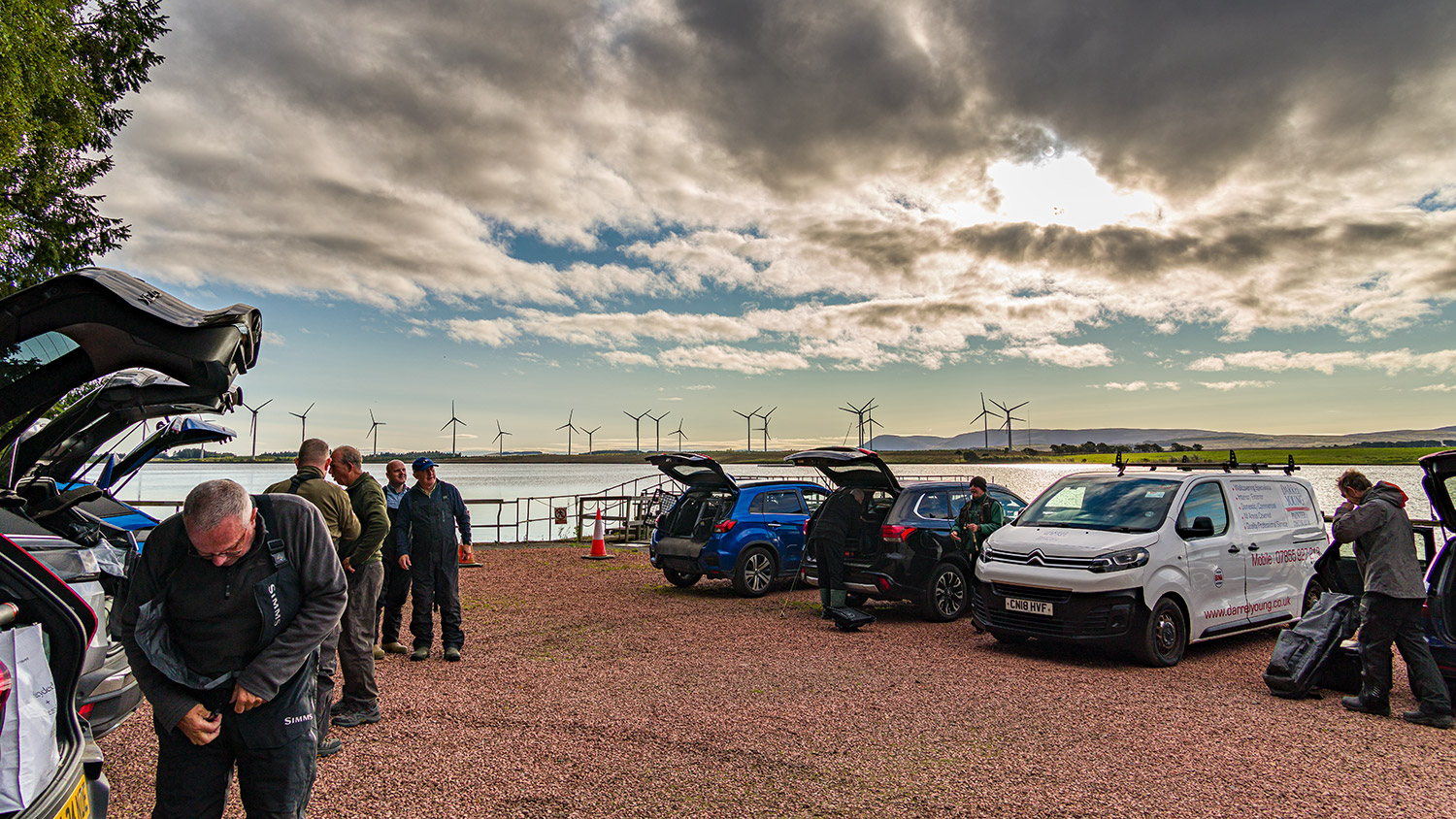
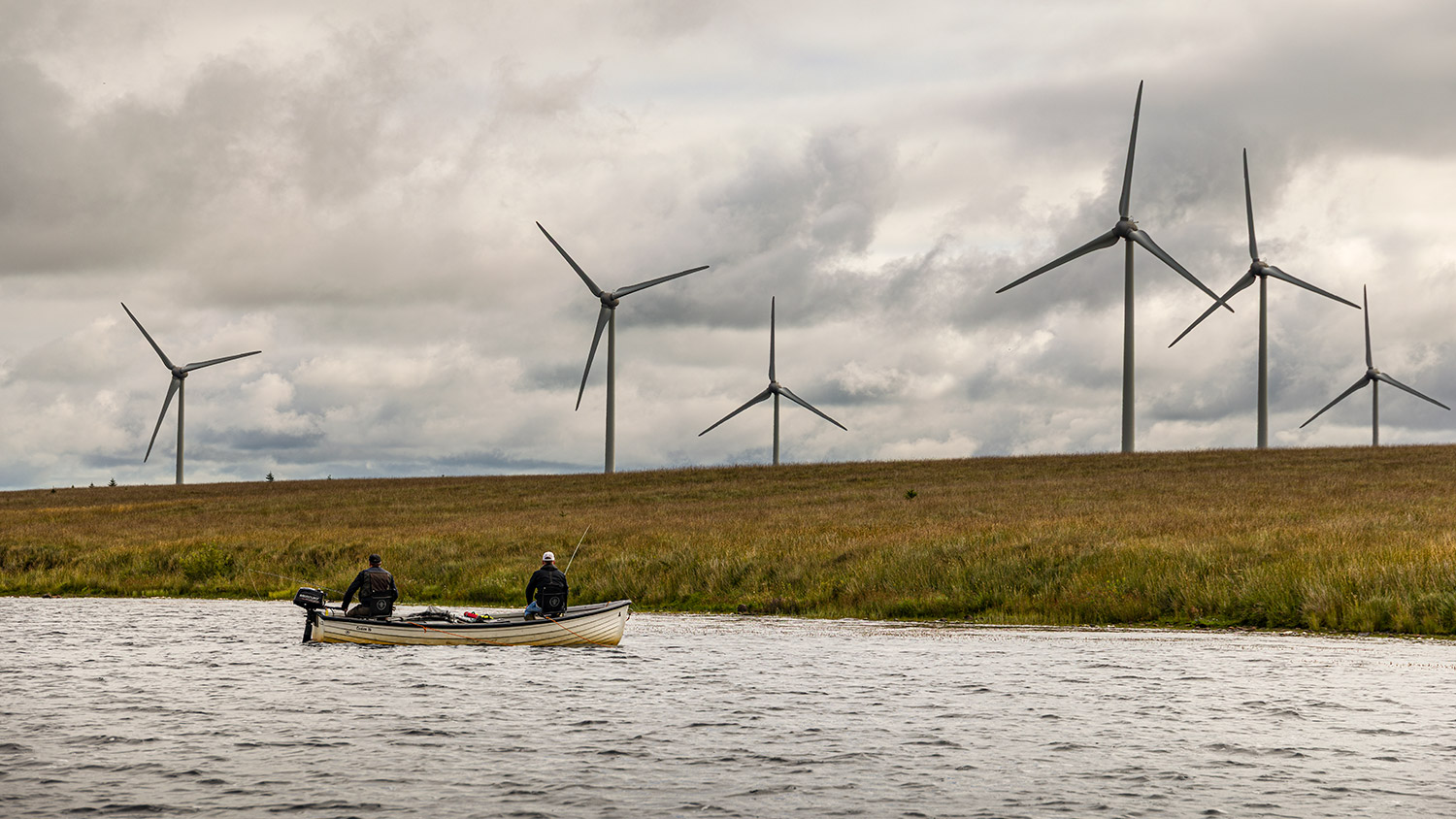
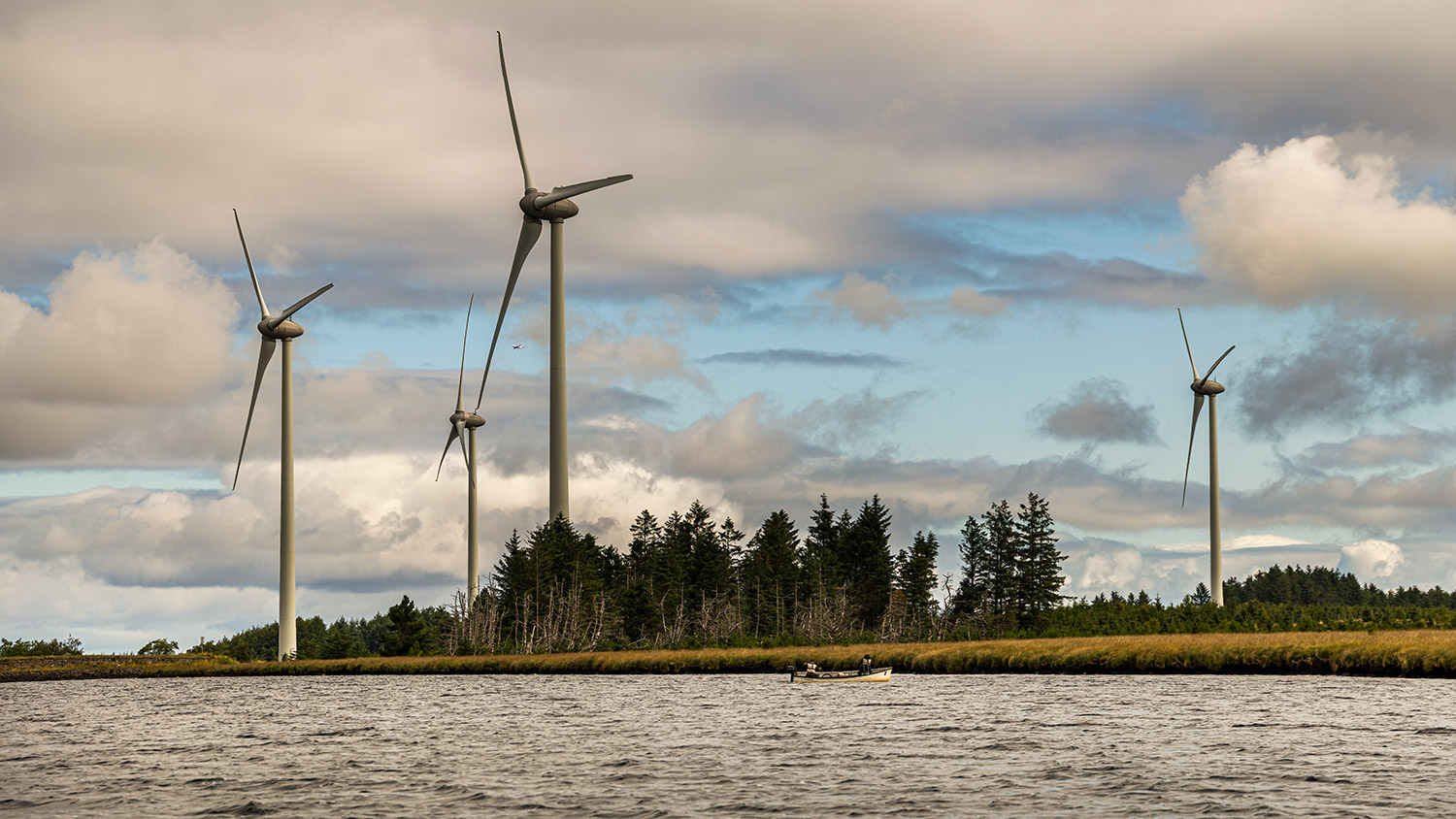
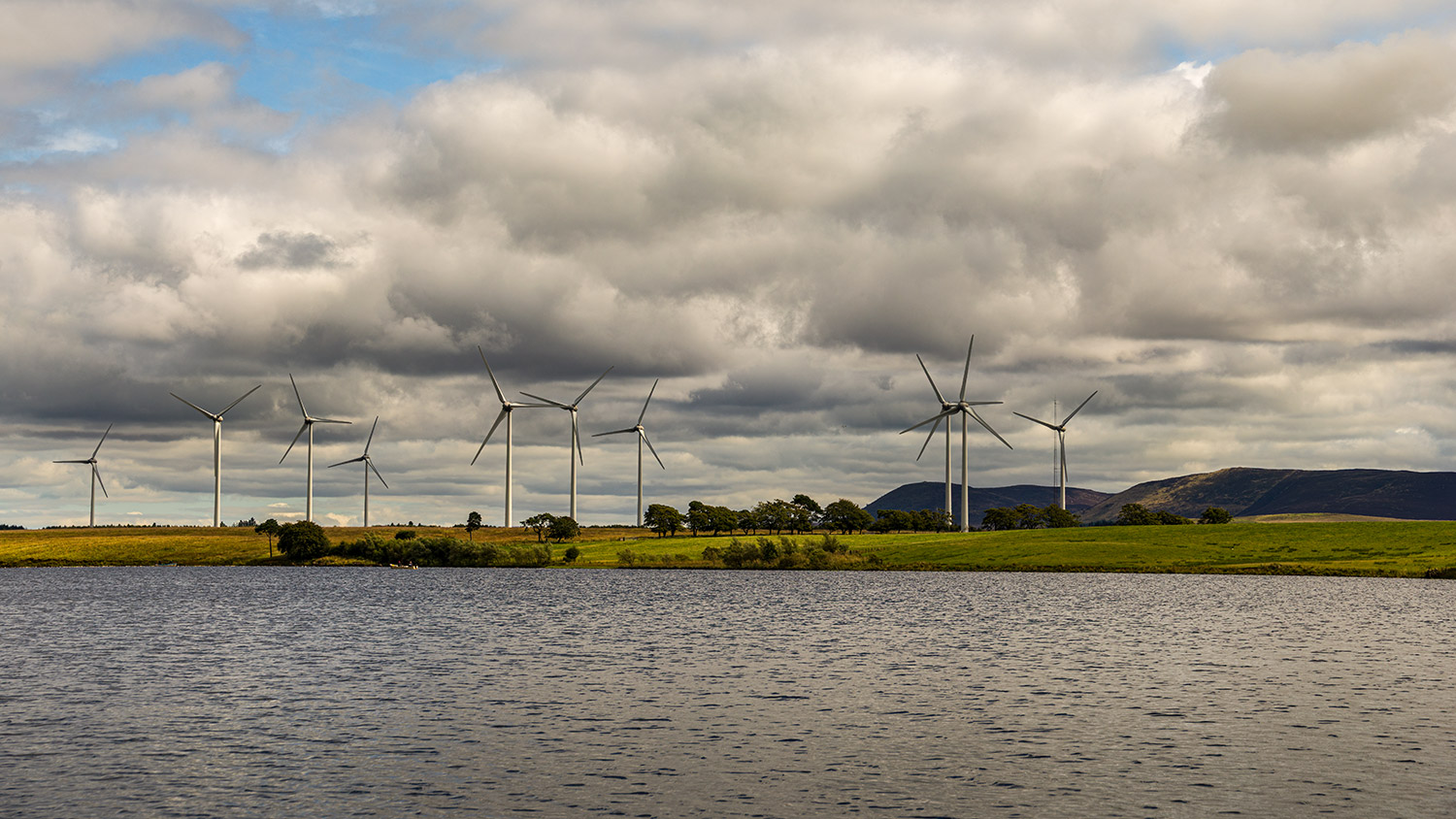
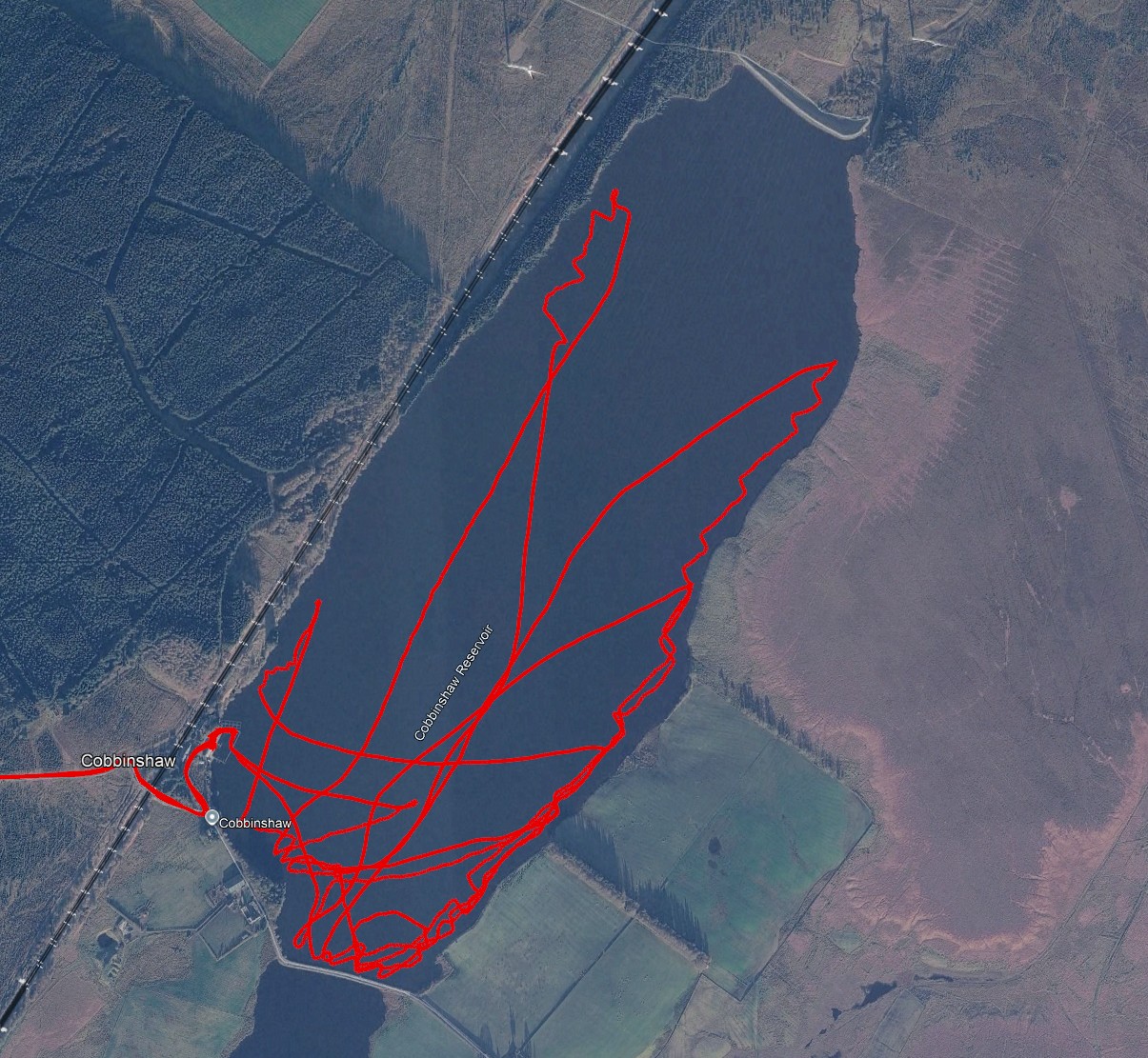
Fishery reports and a few good friends suggested that Cobbinshaw had been tough of late. It was still encouraging to see the car park busy, with a number of well-known rods also out for a fun day. We were really not sure what to expect. When I say ‘we’, that refers to me and my boat partner for the day, Davy Syme. It’s a fair expanse of water (the active fishing water surface covers around 250 acres), so there is always plenty of room to fish comfortably.
Cobbinshaw has a good reputation as a top of the water venue. Traditional loch-style patterns still do well, apparently, with small muddlers, bibios and sedges all regularly getting a mention. What was nice was the weather had improved, with temperatures now much more conducive, and we’d even had a few much needed heavy showers. The water was in good condition, with decent clarity and a decent ripple. Great! The area known as duffers’ corner is sheltered and there were a number of small fry showing and an odd trout smutting in the quiet water there.
Our decision was made. Davy went for an intermediate and some typical rainbow lures. I didn’t have a clear plan, but went for a 12 ft slow tip, armed with black booby, red-ribbed skinny cormorant on the middle and bit of colour on the top dropper (not very imaginative, I confess). Next, where do we set up? Jimmy McBride, who knows the water well, suggested trying along the railway line to start with and that drifting across open water can be effective. Who am I to disagree?
Well, we had the first fish fairly early, and it was a good fish – well-conditioned and bright – and it came to the black booby on the hang. Boats were all well-spread along the causeway and far shore, down to ‘the foot o’ the wood’, and they were actively repeating those drifts. However, we continued to drift along the railway line with little success. There was not much fly life around and very few fish weer showing, other than occasional leapers in the open water. We headed back towards duffers and the steady breeze saw us covering some good looking water. Fish were still smutting in this area, but I’m not very comfortable in those flat calms.
That said, we picked up another good fish to the black booby. I then switched to the dries. Although not many feeding fish were showing, we were hoping they might come blind. Davy switched to 3 ft tip, with nymphs and small beetle patterns. I managed one to a black gnat that came out of the blue. Davy by now was getting some action to his black beetle. The swirling wind was irritating, so we reset with the intention of drifting right across from the railway line to the far shore… and see what happens. This turned out to be a good decision. A couple of small grunters triggered a bit interest. There were lots of what looked like text book dry fly takes that ended somehow fishless. However, we persisted and got great sport. I reckon we got hold of about one in every 5 fish. There were long gaps in between, but this was punctuated by pods of fish.
We really enjoyed the day and we ended with 11 fish to the boat, 7 of which came to the dries. It was a mixed day for the club with a total of 26 fish for our 12 rods. The good news is that conditions are improving by the minute.
Mel Mitchell adds:
As a club we usually take a break from fishing during the month of July and avoid what might be considered the warmer summer period. This year, our break has proved to be a wise decision, having witnessed the weather we have experienced. After 5 weeks of never wetting a line, at least on my part, we had the added disappointment of having to cancel our planned first outing back to the Watch Water for strong winds. After this extended break, I for one was keen to get back out on the water.
Standing on the pontoon, it looked like we had some reasonably good conditions, with good cloud cover, a Westerly breeze providing a good wave and an air temperature that had dropped from that of recent days. However, it still felt sufficiently warm to ask the question of whether a jacket would be needed or not. Once we got out into open water it was a very definite yes, with a notably cool breeze catching your back.
Bob Whyte and myself were paired up for the day, and as we slowly edged out of the pontoon area, a quick look left and right indicated that most, if not all, of the boats had either quickly swung left and headed down the railway shore, or swung right and parked in the shelter of Duffers’ Corner. We also saw that Keith Logan, despite the break, hadn’t forgotten how to do it, with his rod already bent as he played a trout just a few boat lengths from the pontoon. A regular occurrence on his part for the first cast of the day! The far shore was completely devoid of boats, so Bob opened up the motor and we headed for the top of the wind on the far shore.
Car park chatter had suggested that the fishing had been tough, not surprisingly considering the recent weather, and that just as many trout were being caught on dries as those caught deeper. We both decided to start on the dries. With Bob on the motor and a Westerly wind, it meant I would have the inside line along the South Shore. We were hoping simply to drift along the shore, but the wind had other ideas and kept pushing us more onto the shore rather than along it. It didn’t take long before Bob was getting a lot of interest to his orange daddy, with fish regularly swirling and splashing at the fly, plus the occasional bow wave following-on. The problem was that the fish were simply not committing to the take and all to be had was simply a lift into fresh air, plus the associated language one usually hears when this happens. I was having the same problem, though I was not generating anything like the level of interest Bob was getting. We both tried various dry fly patterns, Bob presenting a full rainbow of coloured Daddies, all equally generating interest but still nothing would stick.
As we drifted, there was a lot of weed / vegetation close to the shore that was forcing us to drift slightly further out into the deeper water. The thinking was that this might have been a little fortuitous for us and kept us on a better line with more fish in deeper water. More so for Bob on the outside line. There was a section of water along the shore, between the 2 fences that taper off into the reservoir itself, where Bob was getting significantly more interest. It was also at this same section that we saw 4 cormorants sitting on the fence posts out in the water, wings held out to dry before taking another dip. We also saw an Osprey dive and successfully manage to get a trout to stick. Pity we couldn’t make anything stick as we covered the same section. There was little sign of any fly life and equally there was little or no sign of fish rising and feeding at the surface. What we could see, and there were plenty of them, were fish regularly jumping completely out of the water. Perhaps this was a sign of a distressed fish?
We spent the morning fishing the south shore, trying to find something to make them stick but, through fear of being labelled “insane” by repeating the same thing over and over, expecting a different result, we decided to take lunch and retired up to the road wall at Duffers’ corner for some respite from the wind. On arrival, we saw a few fish moving in the calmer water, close to the wall. As we sat and enjoyed lunch, we watched Dougie Skedd and Peter Fionda, who had obviously also seen a few fish moving in this area, very carefully manoeuvre their boat into position and stalk a few of the rising fish. It didn’t take long before we saw Dougie’s rod lift into a trout. Great stalking skills but excellent boat craft from Peter.
Post lunch, I decided dries had had their chance and I switched to a 3ft midge tip and washing line set-up with a coral booby on point and some wet flies. Quickly I was able to cover one of the moving fish along the road wall and finally managed to land our first trout of the day to the coral booby. This was soon followed by a second opportunity to the booby, but I dropped it. That was enough for Bob ,who also decided to retire the dries. As we slowly made our way along the road wall I netted a second trout to a cormorant, tied with black rabbit fur and red holographic cheeks.
We then decided to return to the South shore and repeat our drift, using the new set up. I netted a further trout to the cormorant and a second to a pheasant tail nymph, but only after it had shot directly left over to Bob’s line where it caused a tangle of all tangles. After sorting the tangle, we decided to try our luck over at the railway shore. We drifted a couple of times out over open water towards the cages, where Bob had some interest, but again we failed to hook up with anything. We met up with Keith, who was now out on his own, Davy having had to leave early for a prior engagement. He was having some success on dries and suggested anything “bushy”. I put on a team of hogs and pulled them through the ripple, but got nothing. A final few casts up in Duffers’ Corner similarly resulted in nothing so we decided to call it a day. We finished the day with 4 trout to the boat. A tough day, but still enjoyable with all the splashing and swirling.
.